
"Alberta and Ottawa Forge Revolutionary Childcare Partnership - A Game-Changer for Families Everywhere!"
Revolutionizing childcare in Alberta: How a year-long partnership with Ottawa is changing the game.
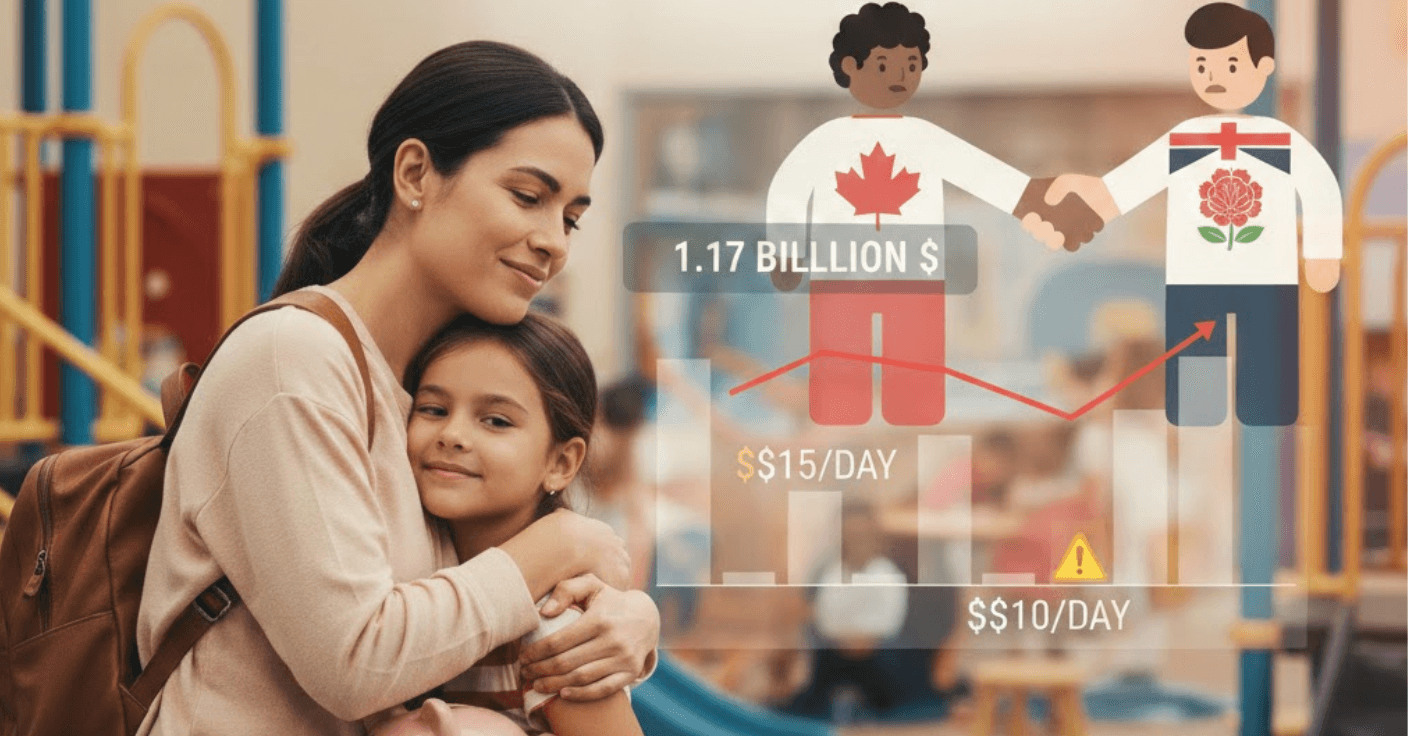
In a move that offered a significant sigh of relief to thousands of Alberta families, the provincial and federal governments recently announced a one-year extension to their bilateral Early Learning and Child Care (ELCC) agreements. The deal, which injects over $1.17 billion in federal funding for the 2026-2027 fiscal year, is a crucial lifeline. It ensures that licensed child-care fees will remain at the current average of $15 per day through March 31, 2027, preventing a sudden and potentially catastrophic jump in monthly costs for parents.
However, the one-year nature of this extension, while offering immediate stability, underscores the deep and ongoing philosophical divide between the two governments on how a pan-Canadian childcare system should operate. Alberta was the last province to agree to this extension, and the short timeline signals a tactical pause rather than a resolution, setting the stage for high-stakes negotiations over the program's long-term future.
💰 The Immediate Relief: What the Extension DeliversThe most important outcome of this agreement is the continuation of affordability for families. Before the original deal was struck in 2021, some Alberta families were paying up to $100 per day for child care. The implementation of the Canada-wide Early Learning and Child Care (CWELCC) system, which aimed for an average of $10 per day by 2026, has already slashed these costs to about $15 per day.
For a family with one child in full-time care, this means monthly fees are currently a set rate of $326.25. Without this extension, those fees could have easily skyrocketed back to pre-2021 market rates of over $1,000 per month, undoing years of financial planning and forcing many parents, particularly mothers, out of the workforce. Federal Minister of Jobs and Families, Patty Hajdu, emphasized this point, calling affordable child care an "economic tool" that benefits both families and the broader provincial economy by increasing labour force participation. Beyond the dollar figure, the extension includes two key concessions that Alberta Minister of Education and Childcare, Demetrios Nicolaides, highlighted as critical victories for the province’s unique child-care landscape:
These changes directly address a major pain point in Alberta, where a significant portion of the child-care sector, approximately 56%, is run by for-profit operators. The original federal framework’s perceived bias toward non-profit expansion was seen by the UCP government and many operators as a constraint that failed to acknowledge Alberta’s market reality, particularly in rural and underserved areas.
🤯 The Core Conflict: $10 a Day vs. Alberta’s VisionThe one-year extension is fundamentally a concession by both sides to buy time, primarily because Alberta is struggling to meet the core mandate of the federal program: the $10-a-day target by March 2026.
The $10-a-Day DilemmaWhile eight other provinces and territories are already delivering regulated child care for an average of $10 a day or less, Alberta remains at the $15-a-day mark and is not guaranteed to hit the lower target under the current funding structure.
Minister Nicolaides has been vocal about the financial difficulties in reaching the $10 goal. He stated that for the province to meet the target, Ottawa would need to commit an estimated $4 billion in additional funding, suggesting the current federal investment is insufficient for the scale and cost of Alberta’s system.
Ideological and Structural DifferencesThe underlying tension extends beyond mere funding. It touches on two major philosophical differences in how the system should be run:
1. The For-Profit/Non-Profit DebateThe federal plan prioritizes non-profit child care, viewing it as a system built on pedagogy and community benefit rather than shareholder profit. Alberta’s sector, however, is heavily reliant on for-profit operators. The UCP government, which champions a market-based, choice-driven approach, argues that the federal framework’s cap on for-profit spaces is strangling expansion and creating huge disparity: some families pay $15 a day, while others on a waitlist at an ineligible for-profit centre are forced to pay market rates of over $1,000.
The extension's provision for 5,000 new for-profit spaces is a temporary solution, but Alberta’s long-term goal is to put all licensed providers, both non-profit and for-profit, on equal footing, an outcome the federal government has historically resisted.
2. Universal Flat Fee vs. Income-Tested SubsidyA second, critical area of disagreement is the funding model. The current CWELCC system uses a universal flat-fee model, meaning the $15-a-day rate is available to virtually all families, regardless of income.
The Alberta government has indicated its preference for an income-tested system, a change that would see affordability funding directed primarily to low- and middle-income families who need the financial support the most. This approach aligns with a conservative view that taxpayer dollars should be targeted to need, not a universal benefit. Conversely, the federal government's universal approach is foundational to their goal of turning child care into a national social program, similar to public schooling.
🗣️ Growing Pains and Sector UncertaintyThe decision to sign only a one-year extension has provided short-term clarity but has amplified long-term uncertainty among the two most impacted groups: parents and child-care operators.
Parental AnxietyWhile parents are grateful for the immediate savings, the looming deadline of March 2027 creates a new source of anxiety. The one-year countdown guarantees that next year will feature another round of tense negotiations, with the possibility of a drastic fee hike if a new, long-term deal is not reached. For families trying to budget and plan for years of child care, this instability makes major financial and career decisions difficult.
Operator and Educator ConcernsFor child-care providers, the one-year deal complicates investment and human resource planning. Building new child-care spaces requires significant capital investment, and centres are hesitant to take on long-term debt or commit to large-scale hiring without a multi-year funding guarantee.
Furthermore, the CWELCC system is built on improving the quality of care, which requires significant investment in wages, training, and professional development for early childhood educators (ECEs). The uncertainty of funding makes it difficult to recruit and retain staff, exacerbating the existing staffing shortages that plague the sector nationwide.
Krystal Churcher, Board Chair of the Association of Canadian Early Learning Programs (ACE), praised the extension but noted that the funding caps and the short timeline perpetuate an "out of touch with reality" system that continues to disadvantage some families and providers.
🗺️ What Comes Next: The Negotiation LandscapeThe next 15 months will be dedicated to negotiating the replacement for the original five-year agreement that was set to expire in 2026. Alberta’s position is clear: any new deal must provide greater flexibility, respect the province’s mixed delivery system (for-profit and non-profit), and offer a more sustainable funding model that is realistic for the goal of $\$10$ a day.
The Path to Resolution
Ultimately, the one-year extension has bought both levels of government, and, critically, Alberta families, a crucial measure of breathing room. It stabilizes the program and prevents an immediate crisis. However, it also postpones the fundamental reckoning over the ideological and financial future of the Canada-wide child-care system in Alberta. The clock is now ticking toward March 31, 2027, and the province must use this time to solidify a long-term agreement that truly addresses the needs of its diverse population of parents and providers. |


Sep 13, 2026
Carbon Capture Storage Hub Services in Edmonton, Alberta | CCS Hub Canada
Explore Alberta's expanding carbon capture storage hub network, from Edmonton's Wabamun project to the Origins CCS hub — Canada's largest CCS facility.

Sep 10, 2026
Meta AI Data Centre Coming to Edmonton Alberta | Sturgeon County Project
Meta AI data centre in Sturgeon County is reshaping Edmonton Alberta's economy with 3,000+ jobs and a $13B investment in Canada's AI future.

Sep 7, 2026
Shop Local in Edmonton: Supporting Local Businesses for a Thriving Community
Discover how Edmonton's shop local movement boosts local business support and small business growth for a resilient community.

Sep 2, 2026
International School Trips in Edmonton: EPSB Cancels Overseas Travel
Edmonton public schools announce school trip cancellations for international school trips, impacting students and teachers across the district.
0 Comments
Join the conversation
Be the first to comment
Share your thoughts above.