
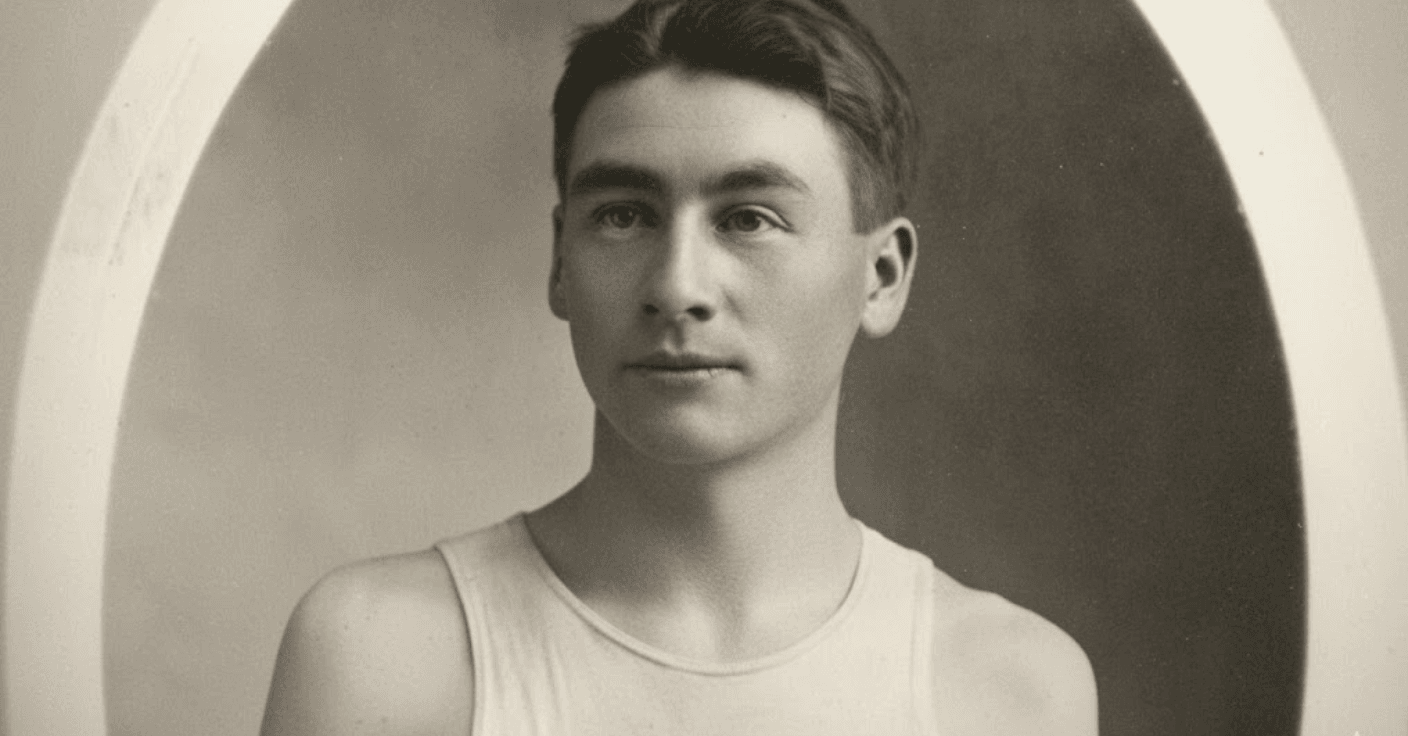
Alex Decoteau: Edmonton's Indigenous Olympian and Police Hero
Discover the incredible story of Alex Decoteau, Canada's first Indigenous police officer, a 1912 Olympian, and a WWI hero whose legacy lives on in Edmonton.
In the heart of downtown Edmonton, there is a green space that tells a story of incredible courage, groundbreaking achievement, and ultimate sacrifice.
It’s called Alex Decoteau Park, a place of community gardens, public art, and the sounds of a city alive.
But the name it carries belongs to a man whose life was a testament to defying barriers, a man who was an Olympian, a soldier, and a trailblazing police officer for the Edmonton Police Service.
His story is not just history; it is woven into the very fabric of our city.
Alex Decoteau was born on November 19, 1887, on the Red Pheasant Cree Nation in Saskatchewan, a beginning that held few clues to the extraordinary path he would walk.
His father, a Métis man, was tragically murdered when Alex was only three, leaving his Cree mother unable to support her family.
This early hardship led him to the Battleford Industrial School, one of Canada's residential schools, a chapter of deep national pain and complexity.
Yet, it was there that a spark ignited; Decoteau discovered an incredible aptitude for athletics.
As a young man, he moved to Edmonton, finding work as a blacksmith in his brother-in-law's machine shop.
But the forge and anvil were not his destiny.
In 1909, he made a monumental decision and joined the Edmonton police force.
With that, Alex Decoteau became the first Indigenous police officer in Canada.
He quickly became a respected figure, one of the city's first motorcycle officers, and was promoted to the rank of sergeant in 1914, even being given command of his own station.
While he was breaking barriers in law enforcement, his feet were making history on the track.
Decoteau was a phenomenal long-distance runner, dominating races across Western Canada.
His talent was undeniable, setting records and collecting trophies with astonishing regularity.
His athletic prowess culminated in 1912 when he represented Canada at the Summer Olympics in Stockholm, competing in the 5,000-metre race.
Although leg cramps prevented him from medaling in the final, he returned to Edmonton a hero, celebrated with a parade through the city's downtown.
But the world was changing.
The outbreak of the First World War called to him, and in 1916, Decoteau enlisted in the Canadian Expeditionary Force, trading his police sergeant's uniform for that of a soldier.
He initially joined the 202nd (Sportsmen's) Battalion, a fitting assignment for a man of his athletic stature.
Even overseas, he continued to run, once winning a five-mile race in England where King George V, who was in attendance, personally awarded him a gold pocket watch.
In May 1917, he was transferred to the 49th (Edmonton Regiment) Battalion and sent to the front lines in France.
His incredible speed and endurance were immediately put to use in one of the most dangerous jobs imaginable: a dispatch runner.
He carried vital messages between trenches, sprinting across the treacherous, war-torn landscapes of the Western Front.
His service was an act of profound bravery, a race against death itself.
Tragically, on October 30, 1917, during the brutal and horrific Battle of Passchendaele, Alex Decoteau's run came to an end.
He was killed by a sniper's bullet, just weeks shy of his 30th birthday.
He was buried in the Passchendaele New British Cemetery in Belgium, a world away from the Saskatchewan reserve where he was born and the Edmonton streets he vowed to protect.
For decades, his story was not widely known.
But in Edmonton, his spirit never truly left.
In 1985, a special Cree ceremony was held in the city to finally bring his spirit home, an event attended by family, Indigenous veterans, and members of the Edmonton police.
Today, his legacy is more visible than ever.
The Alex Decoteau Park, opened in 2017 at 105th Street and 102nd Avenue, is the first new downtown park built in three decades.
It is a vibrant community hub, hosting events like the Downtown Edmonton Community League's annual corn fest and gatherings for the Edmonton Mural Festival, a fitting tribute for a man who served his community so passionately.
He has been inducted into the Canadian, Alberta, Saskatchewan, and Edmonton Sports Hall of Fame.
In a poignant international recognition just last year, on National Indigenous Veterans Day, a commemorative plaque was unveiled near where he fell in Belgium, a permanent reminder of his sacrifice.
The Edmonton Police Service continues to honor its first Indigenous officer, even creating a comic book, "Legacy of Heroes," to share his incredible story with a new generation.
His life serves as a powerful bridge in the complex relationship between police and Indigenous communities, a journey the service acknowledges requires ongoing work toward reconciliation.
Alex Decoteau's story is one of resilience, of breaking racial and social barriers, and of dedicating one's life to service, whether on the streets of Edmonton, the Olympic track, or the battlefields of Europe.
He remains an enduring symbol of what it means to be a hero, not just for Edmonton, but for all of Canada.
Our reader's FAQs
Who was Alex Decoteau? Alex Decoteau was a trailblazer from the Red Pheasant Cree Nation. He became Canada's first Indigenous police officer when he joined the Edmonton Police Service in 1909. He was also a celebrated long-distance runner who competed for Canada in the 1912 Stockholm Olympics and served as a soldier in World War I, where he was tragically killed in 1917.
How is Alex Decoteau remembered in Edmonton? Edmonton honors Alex Decoteau in several significant ways. The most prominent is Alex Decoteau Park, a community green space in the downtown core. He has also been inducted into the Edmonton Sports Hall of Fame, and the Edmonton Police Service continues to share his legacy as a foundational figure in its history and its relationship with Indigenous communities.
What is the significance of Alex Decoteau's story today? His story is incredibly significant today as a powerful example of Indigenous achievement, resilience, and public service. He broke racial barriers in Canadian law enforcement and sport. His life and sacrifice are remembered as part of the ongoing journey of reconciliation, inspiring conversations about history, identity, and the contributions of Indigenous peoples to Canada. |

Sep 13, 2026
Carbon Capture Storage Hub Services in Edmonton, Alberta | CCS Hub Canada
Explore Alberta's expanding carbon capture storage hub network, from Edmonton's Wabamun project to the Origins CCS hub — Canada's largest CCS facility.

Sep 10, 2026
Meta AI Data Centre Coming to Edmonton Alberta | Sturgeon County Project
Meta AI data centre in Sturgeon County is reshaping Edmonton Alberta's economy with 3,000+ jobs and a $13B investment in Canada's AI future.

Sep 7, 2026
Shop Local in Edmonton: Supporting Local Businesses for a Thriving Community
Discover how Edmonton's shop local movement boosts local business support and small business growth for a resilient community.

Sep 2, 2026
International School Trips in Edmonton: EPSB Cancels Overseas Travel
Edmonton public schools announce school trip cancellations for international school trips, impacting students and teachers across the district.
0 Comments
Join the conversation
Be the first to comment
Share your thoughts above.