
Sun Yee Quon: The Story of Edmonton's Chinatown & Its Merchants
Discover the legacy of Sun Yee Quon and the pioneering Chinese merchants who shaped Edmonton's Chinatown, from its early days to its modern revitalization.
image source: sfu.ca |
The name Sun Yee Quon echoes through the oral histories of Edmonton's early Chinese community, a name synonymous with the pioneering spirit of merchants who laid the groundwork for what would become a thriving cultural hub.
While specific records of a single business under this name are scarce, the story it represents is that of countless early entrepreneurs whose resilience and vision shaped the very fabric of the city.
Their journey is inextricably linked with the evolution of Edmonton's Chinatown, a district born of necessity and transformed by decades of perseverance.
The first Chinese settlers arrived in Edmonton in the late 1800s, with individuals like Chung Kee establishing businesses as early as 1890.
These pioneers were not just businessmen; they were community builders.
Facing systemic discrimination and the profound loneliness of being separated from their families by restrictive immigration laws, they created a vital support system for one another.
Initially, this nascent community was small, with just a handful of laundries and restaurants clustered around Jasper Avenue and 97 Street, an area that would become the city's first Chinatown.
By 1911, the Chinese population had grown to over 150 people, almost entirely men, and by 1921, it had surpassed 500.
This growth fueled the expansion of Chinatown, turning it into a crucial sanctuary offering housing, employment, and social connection.
Organizations like the Mah Association, the Wong Society, and the Gee Association became the pillars of the community, providing essential services and a sense of belonging for the so-called “bachelor society” of the time.
Early Chinese Edmonton was a landscape of immense struggle but also incredible ingenuity.
Entrepreneurs operated restaurants, import stores, and other small businesses that not only served their own community but also introduced Edmontonians to new foods and cultures.
Their success was hard-won, built on long hours and a deep commitment to mutual support.
One of the most enduring examples of this merchant history is the story of the Quon family and The Lingnan restaurant.
Founded in 1947, The Lingnan stands as a testament to the multi-generational effort and community leadership that defined the era.
The Quon brothers established a reputation for exceptional food and warm hospitality, creating a space that was both a family business and a community gathering place.
Their story, which began on 97 Street, mirrors the broader narrative of Chinatown's own journey and resilience.
The post-war years brought significant change.
After the repeal of the Chinese Immigration Act in 1947, families were finally allowed to immigrate, slowly transforming the demographic landscape.
However, urban development pressures in the mid-20th century saw the original Chinatown decline, with many residents and businesses moving away.
It was a period of profound uncertainty for the community's future.
Yet, the spirit of the early merchants endured.
A new wave of immigration from Hong Kong, Taiwan, and Southeast Asia in the 1960s and 70s brought renewed energy.
This led to the emergence of a second Chinatown, further north along 97 Street, creating the two distinct districts, Chinatown South and Chinatown North, that exist today.
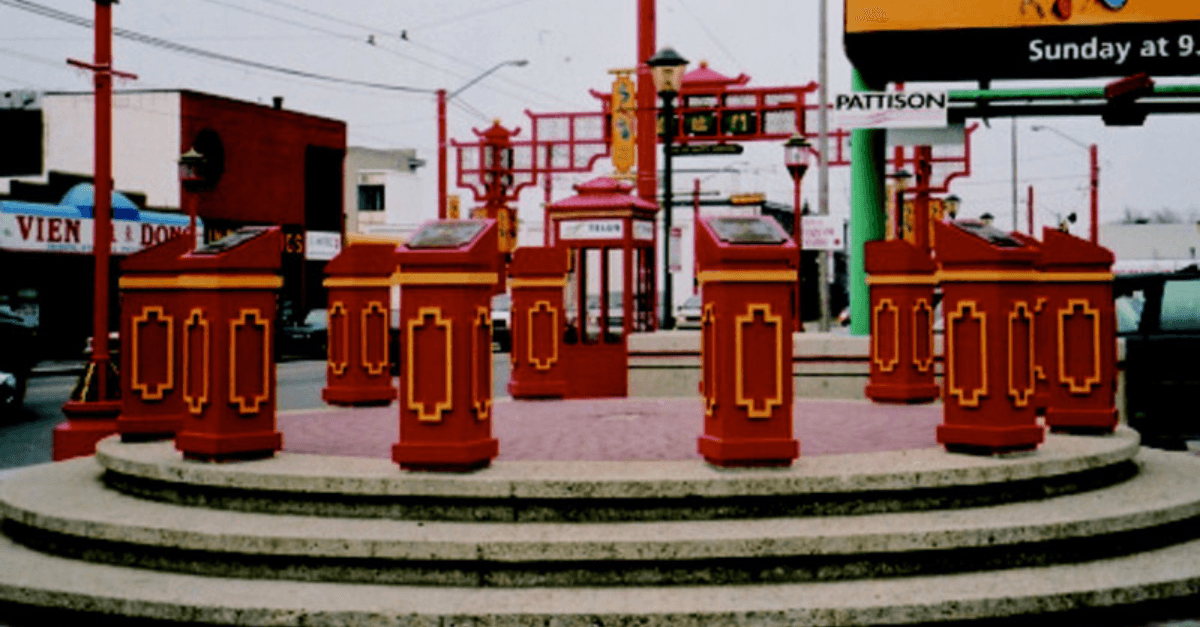
Landmarks like the Harbin Gate, installed in 1987 in Chinatown South, became powerful symbols of the community's cultural pride and its connection to Edmonton.
The development of the Chinese Multicultural Centre and the Chinese Elders Mansion further solidified this area as the community's social and cultural heart.
This evolution was not without conflict or challenge.
The community had to navigate complex city planning decisions and advocate fiercely for the preservation of its heritage and identity.
Today, Edmonton's Chinatown faces new challenges, including social issues and the changing habits of a suburbanized community.
Goods and services once found only in Chinatown are now available across the city, impacting visitor numbers.
But the legacy of leaders like the Quon family continues through ongoing revitalization efforts.
The City of Edmonton's Chinatown Strategy aims to enhance safety, support economic development, and celebrate the area as a destination.
It’s a modern-day echo of the community-building spirit of a century ago.
The story of Sun Yee Quon is, therefore, not the story of one person or one business.
It is the collective story of Edmonton's Chinese merchants and their families.
It is a narrative of adaptation, from the early days on Rice Street to the establishment of Chinatown South and North.
It is a story of community leadership that built associations from scratch and fought for a place in the city's landscape.
Their history is woven into the very streets of McCauley and Boyle Street.
As Edmonton continues to grow, the foundations laid by these pioneers remain a crucial part of the city’s identity, reminding us that vibrant communities are built not just with bricks and mortar, but with unwavering resilience and a shared vision for the future.
FAQ: Early Chinese History in Edmonton
What was the first Chinese business in Edmonton? The first documented Chinese resident, Chung Kee, arrived in 1890 and established a laundry near the offices of the Edmonton Bulletin. This marked the beginning of Chinese entrepreneurship in the city.
Why are there two Chinatowns in Edmonton? The original Chinatown emerged around Jasper Avenue and 97 Street. Due to urban renewal and development pressures in the mid-20th century, the community began to shift. A 1979 plan focused development on what is now Chinatown South (around 102 Avenue), while a new wave of immigrants and businesses in the 1970s established a commercial district further north, creating what is known as Chinatown North.
What is the significance of the Quon family in Edmonton? The Quon family, founders of The Lingnan restaurant in 1947, represent a legacy of successful Chinese merchant history and community leadership in Edmonton. Their multi-generational business is an iconic institution and a living link to the history and evolution of the city's Chinese Canadian community. |

Sep 13, 2026
Carbon Capture Storage Hub Services in Edmonton, Alberta | CCS Hub Canada
Explore Alberta's expanding carbon capture storage hub network, from Edmonton's Wabamun project to the Origins CCS hub — Canada's largest CCS facility.

Sep 10, 2026
Meta AI Data Centre Coming to Edmonton Alberta | Sturgeon County Project
Meta AI data centre in Sturgeon County is reshaping Edmonton Alberta's economy with 3,000+ jobs and a $13B investment in Canada's AI future.

Sep 7, 2026
Shop Local in Edmonton: Supporting Local Businesses for a Thriving Community
Discover how Edmonton's shop local movement boosts local business support and small business growth for a resilient community.

Sep 2, 2026
International School Trips in Edmonton: EPSB Cancels Overseas Travel
Edmonton public schools announce school trip cancellations for international school trips, impacting students and teachers across the district.
0 Comments
Join the conversation
Be the first to comment
Share your thoughts above.