
Tony Cashman: The Voice of Edmonton History and Storytelling
Discover the legacy of Tony Cashman, the beloved Edmonton historian, broadcaster, and author who chronicled the city's soul for generations.
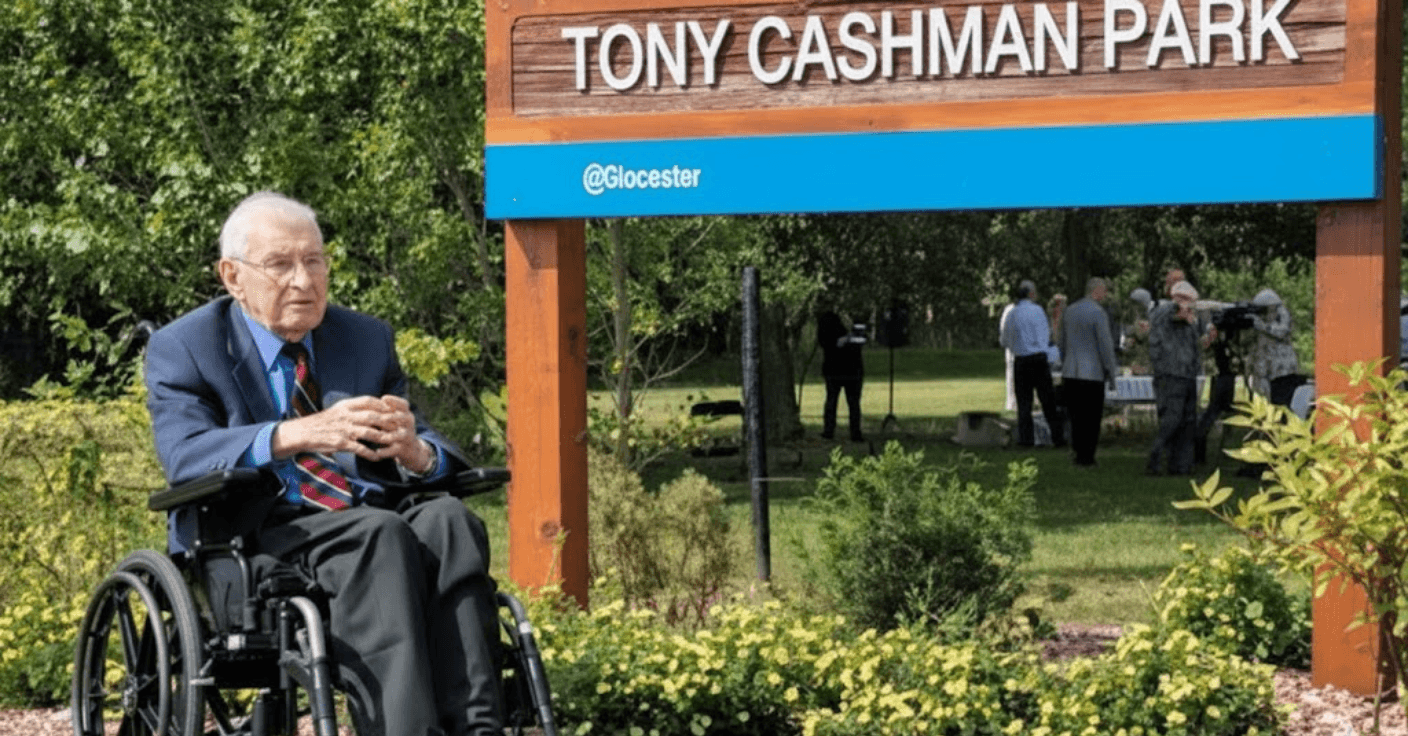
Image source cbc.ca |
Some voices become part of the landscape, as essential to a city’s identity as its river valley or its skyline.
For generations of Edmontonians, that voice belonged to Tony Cashman.
He was a broadcaster, an author, a playwright, and a veteran, but above all, he was a storyteller who held the city’s collective memory in his hands.
His passing in June 2024 at the age of 101 marked the end of an era, but his work ensures that the soul of Edmonton’s history will never fade to silence.
Born in Edmonton in 1923, Cashman’s connection to the city was lifelong and deeply personal.
He grew up in a city finding its footing, a place of pioneers and politics, booms and busts.
This early immersion in the city’s narrative fabric would become the defining feature of his professional life.
His career was not a straight line but a winding path that always led back to the story.
After serving as an RCAF navigator in the Second World War, flying 30 missions over Germany, he returned to a career in journalism and radio.
It was on the airwaves of stations like CJCA and CKUA that Tony Cashman first became a household name in Edmonton.
In 1951, he launched a radio program that would cement his legacy: “The Edmonton Story.”
For ten years, Edmontonians would tune in to hear Cashman’s voice narrate the tales of their town.
He didn’t just recite dates and facts; he resurrected characters.
He spoke of the political firebrands, the daring bush pilots, the nurses who built a healthcare system from scratch, and the everyday people whose lives formed the city’s bedrock.
Over 700 episodes were broadcast, each one a masterclass in making history feel immediate and alive.
Cashman had an uncanny ability to find the humanity in the historical record, a skill that set his work apart.
He believed that history wasn't about dusty archives; it was about people, their decisions, their triumphs, and their follies.
This philosophy carried over from his broadcasts into his prolific writing career.
He authored more than 15 books, including seminal works like “The Edmonton Story,” “When Edmonton Was Young,” and “Edmonton: Stories from the River City.”
Famously, he composed these manuscripts on a 1924 Underwood typewriter, a tangible link to the past he so vividly documented.
His historical accounts were never dry.
They were populated by colourful figures and infused with a narrative drive that made them as compelling as any novel.
He wasn’t just documenting history; he was preserving the city’s character.
From the corporate history of Alberta Government Telephones in “Singing Wires” to the personal bravery detailed in “Heritage of Service: The History of Nursing in Alberta,” his range was remarkable.
Even in retirement, his creative spirit never waned.
Cashman found a new stage for his stories at the Edmonton Fringe Festival, writing ten plays that brought historical figures to life for theatre audiences.
It was a controversial and brilliant move, bridging the gap between historical archives and popular entertainment.
His contributions did not go unnoticed.
The city he loved, loved him back, bestowing upon him a string of prestigious honours.
He received the Edmonton Historical Board Recognition Award, was inducted into the Edmonton Cultural Hall of Fame, and in 2004, on the city’s centenary, he was named Edmontonian of the Century.
This was perhaps the most fitting tribute of all for the man who had so expertly told the city's first-century story.
In 2014, he was awarded the Alberta Order of Excellence, the province's highest honour.
But the most enduring honours are woven into the very fabric of the city he documented.
A neighborhood and a park in south Edmonton now bear the name Tony Cashman, ensuring his legacy is a permanent part of the city’s geography.
When he celebrated his 100th birthday in April 2023, the event was a city-wide celebration of a life dedicated to Edmonton.
It was a moment to reflect on the immense impact one person had on shaping the public's understanding of its own roots.
A documentary film, “The Edmonton Storyteller,” was even produced to capture the life of the man who captured so many others in his work.
Tony Cashman’s work reminds us that history is not a static collection of events; it is a living, breathing narrative.
He gave Edmonton a voice to tell its own story, a gift of immense and lasting value.
His legacy is not just in the books on the shelf or the recordings in an archive.
It lives in the pride Edmontonians feel for their city, a pride he did so much to nurture by showing them the extraordinary stories that were there all along.
He was, and always will be, Edmonton's storyteller.
Frequently Asked Questions
What was Tony Cashman most famous for?
Tony Cashman was most famous for his radio series and subsequent books titled “The Edmonton Story.” Through more than 700 broadcasts and multiple publications, he made Edmonton's history accessible and engaging for generations, earning him the title of “Edmontonian of the Century.”
How did Tony Cashman contribute to Edmonton's culture?
Beyond his work as a historian and broadcaster, Tony Cashman was a playwright who contributed ten plays to the Edmonton Fringe Festival. He preserved the histories of key provincial institutions and was honoured with the Alberta Order of Excellence, solidifying his role as a pivotal cultural figure in the city.
Is there a place in Edmonton named after Tony Cashman?
Yes, in recognition of his immense contributions to preserving the city's heritage, both a park and a residential neighborhood in south Edmonton are named after Tony Cashman. This ensures his name remains a permanent part of the city he so lovingly chronicled. |


Sep 13, 2026
Carbon Capture Storage Hub Services in Edmonton, Alberta | CCS Hub Canada
Explore Alberta's expanding carbon capture storage hub network, from Edmonton's Wabamun project to the Origins CCS hub — Canada's largest CCS facility.

Sep 10, 2026
Meta AI Data Centre Coming to Edmonton Alberta | Sturgeon County Project
Meta AI data centre in Sturgeon County is reshaping Edmonton Alberta's economy with 3,000+ jobs and a $13B investment in Canada's AI future.

Sep 7, 2026
Shop Local in Edmonton: Supporting Local Businesses for a Thriving Community
Discover how Edmonton's shop local movement boosts local business support and small business growth for a resilient community.

Sep 2, 2026
International School Trips in Edmonton: EPSB Cancels Overseas Travel
Edmonton public schools announce school trip cancellations for international school trips, impacting students and teachers across the district.
0 Comments
Join the conversation
Be the first to comment
Share your thoughts above.