

Meta executive to give "behind the build" talk on $13-billion AI data centre
Explore the Sturgeon County data centre project and its AI data centre Edmonton economic impact
Something big is taking shape north of Edmonton, and it is the kind of project that only comes along once in a generation.
Meta Platforms — the global technology company behind Facebook, Instagram, WhatsApp, and Threads — has committed more than thirteen billion Canadian dollars to build a first-of-its-kind AI data centre on 1,750 acres of land in Sturgeon County, nestled within Alberta's Industrial Heartland.
It is the company's first Canadian facility and, according to officials, its largest data centre campus outside of the United States — a distinction that speaks volumes about what Alberta has quietly built into a competitive advantage over other provinces and many international jurisdictions.
The Sturgeon County data centre is not merely a tech project — it is a landmark economic moment for the Edmonton region, and one that industry leaders, local governments, and ordinary Albertans are still processing in full.
At the heart of the conversation is a presentation that is drawing serious attention from the business community.
At an upcoming conference hosted by Alberta's Industrial Heartland Association at the Edmonton Convention Centre, a Meta representative is set to give an intimate look at what it actually takes to build a facility of this scale from the ground up.
The session, framed as a behind-the-scenes account of the project's development, will be held in front of roughly one thousand business leaders and decision-makers gathered to discuss the future of Canada's most advanced industrial zone.
The Meta executive leading the presentation is a community engagement manager for the company, speaking alongside the acting head of Invest Alberta — a pairing that signals just how closely tied this project is to the province's broader economic strategy.
Few projects in Alberta's recent history have generated this level of institutional interest.
At its peak, construction of the AI data centre Edmonton region has been waiting for is expected to employ more than three thousand workers on-site simultaneously.
Once operations begin, the facility will support more than three hundred permanent positions — a smaller number relative to construction, but one that carries long-term significance for the regional workforce and the specialized technical trades that will call this campus home for decades.
The facility itself is planned as a one-gigawatt operation, an almost incomprehensible figure when you consider that the entire city of Edmonton draws roughly 1.4 gigawatts to power its homes, businesses, and infrastructure.
The campus, spread across a footprint that could fit dozens of professional sports fields side by side, is designed to be AI-optimized from the ground up — built for the computing demands of the next era of artificial intelligence development, not just the current moment.
Officials have confirmed it could eventually scale beyond its initial one-gigawatt capacity, with projections suggesting the site could ultimately support as much as 1.8 gigawatts of power — placing it among the very largest data centre developments anywhere in the world.
Power for the facility will come from a combination of grid electricity and a new natural gas-fired generation plant being developed on-site by an energy consortium.
Pembina Pipeline Corporation, alongside financial and energy partners, is involved in the generation infrastructure — a detail that underlines how deeply this project is woven into Alberta's existing industrial ecosystem rather than being grafted onto it from outside.
On the construction side, PCL Construction and Clark Builders have formed a joint venture known as Frost Collective to serve as general contractor, with support from established firms including Stantec and SLB.
The presence of major Alberta-based contractors and engineering firms suggests the economic ripple effect of this project will be felt well beyond Sturgeon County's borders.
One of the more forward-thinking aspects of the project is its approach to water use.
The facility will use a closed-loop, liquid-cooled system designed to eliminate operational water withdrawals from the surrounding environment — an increasingly critical consideration as communities across the province grow more watchful of how large industrial users interact with local water resources.
Beyond energy and employment, Meta has committed approximately sixty million Canadian dollars in local infrastructure improvements, covering upgrades to roads and water systems that will benefit Sturgeon County residents directly — not just the data centre campus itself.
That community investment has helped shift the tone of local conversations from skepticism to cautious optimism in many quarters.
Officials have projected that the project will generate approximately two hundred and fifty million dollars annually in royalties, taxes, levies, and transmission fees for Albertans — a recurring revenue stream that promises to fund public services for years to come without drawing on taxpayer dollars.
The provincial government has also indicated that electricity ratepayers could see a reduction in the transmission portion of their bills as a result of the infrastructure investments tied to the project.
That is a rare and welcome outcome in a province where energy affordability has become an increasingly charged political topic.
Alberta's approach to attracting this investment was notably deliberate.
Unlike jurisdictions that rushed to offer tax breaks or allowed data centres to connect to the grid without adequate power generation in place — with resulting cost increases for households — Alberta's government spent two years studying those outcomes before setting clear rules.
Large data centres operating in the province are now required to bring their own power, fund the infrastructure needed to support their operations, and meet strict environmental and water standards.
That regulatory framework, built before the investment was secured, is part of what made Alberta an attractive destination rather than a cautionary tale.
Sturgeon County sits within Alberta's Industrial Heartland — a zone with deep roots in Canada's petrochemical and energy processing sectors, and one that has spent years positioning itself as a destination for capital-intensive industrial investment.
The area offers development-ready land, proximity to established pipeline and energy infrastructure, and a regional workforce shaped by decades of large-scale industrial project experience.
For a facility of the Meta AI data centre's complexity and scale, those are not minor conveniences — they are foundational requirements that other locations across Canada simply could not match in the same way.
Community grant programs tied to the project will direct funding toward local nonprofits in the Sturgeon County region, a customary but meaningful gesture from a company that has staked a sizable portion of its global infrastructure buildout on this corner of northern Alberta.
Groundbreaking on the facility has already taken place, meaning the project has moved decisively from announcement into active development.
The Edmonton Convention Centre presentation from Meta's community engagement team is expected to pull back the curtain on how the company evaluated sites, navigated Alberta's regulatory landscape, and structured a project of this magnitude — insights that will be closely studied by business leaders hoping to attract or participate in similar investments in the years ahead.
For the broader Edmonton metro region, the significance of the AI data centre Edmonton conversation extends beyond any single job figure or tax projection.
It signals that Alberta's Industrial Heartland is being recognized on a global stage as a serious destination for the infrastructure of the digital economy — not as a future possibility, but as a present reality backed by thirteen billion dollars and counting. |
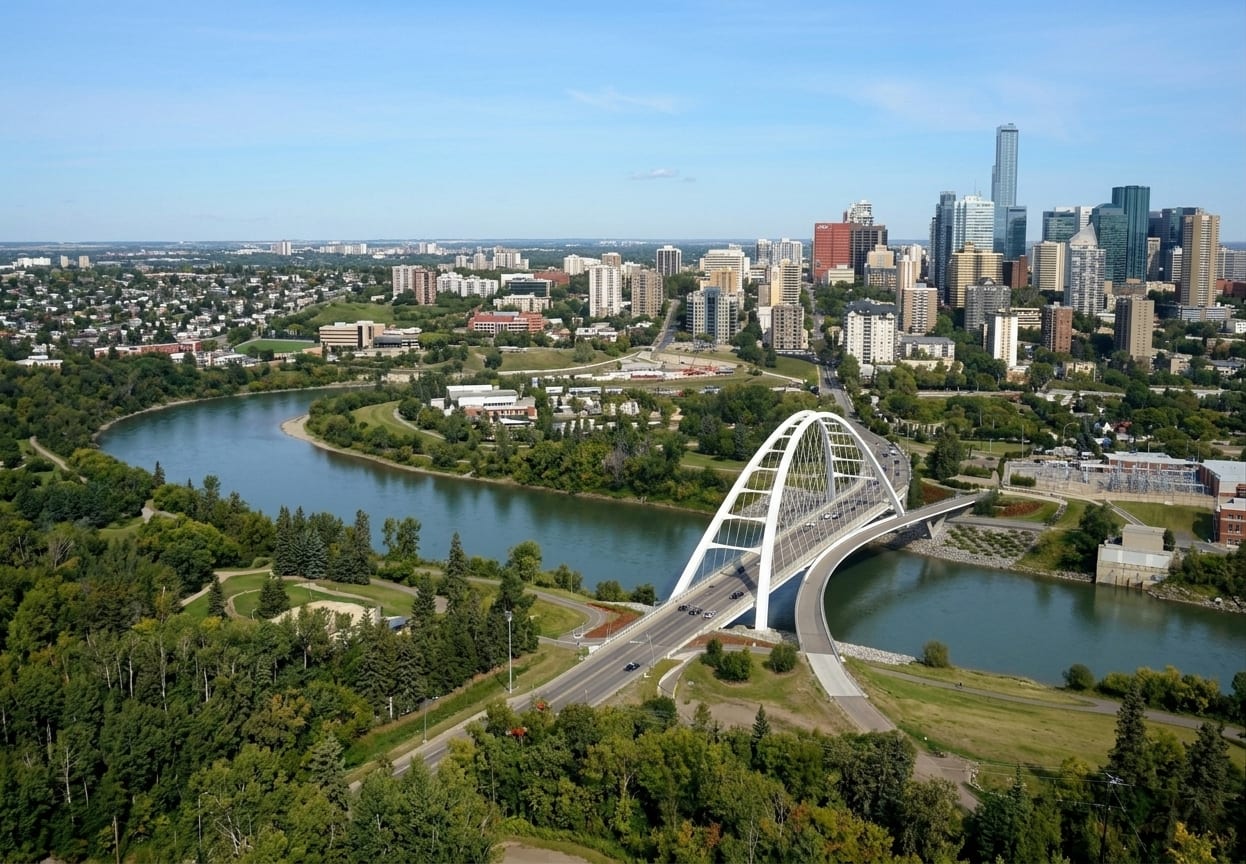
Oct 21, 2026
Edmonton City Budget 2025: What Residents Need to Know About the Draft Four-Year Budget
Edmonton city budget 2025 explained: draft four-year budget drops Nov. 2, hearings begin Nov. 23, and Edmonton electricity rates rise in 2027.
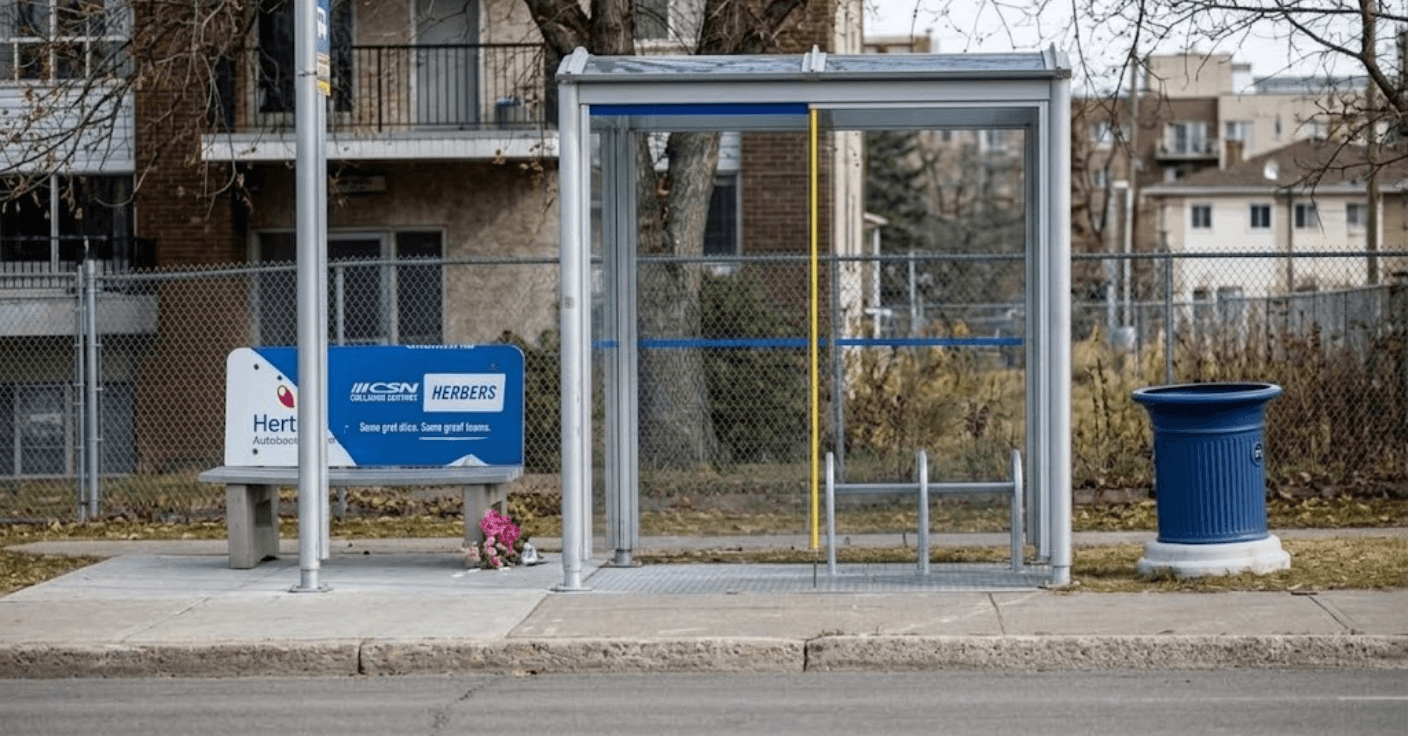
Oct 19, 2026
Fatal Motorcycle Crash in Edmonton Sparks Push for Traffic Safety
A fatal motorcycle crash in Edmonton reignites calls for traffic safety measures as excessive speeding claims a life and injures a baby at a bus shelter.
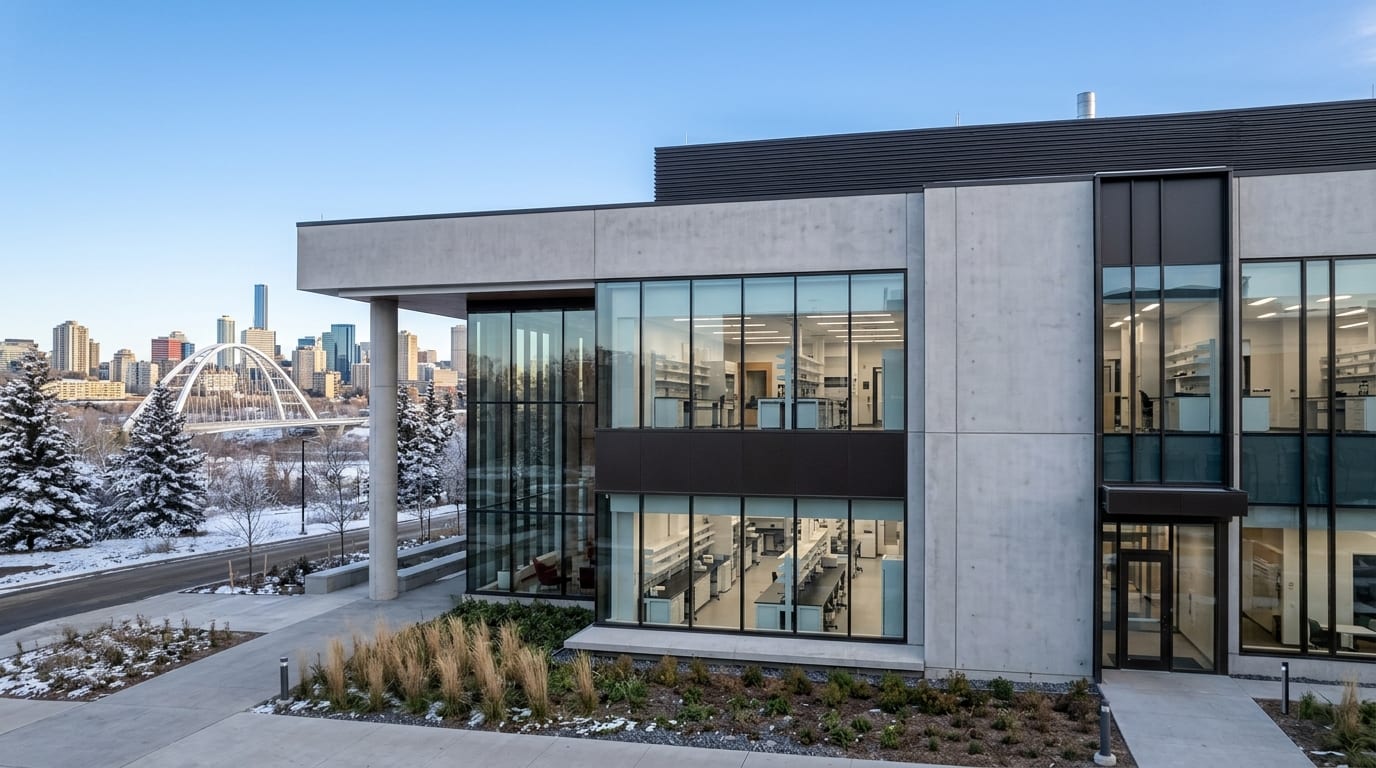
Oct 15, 2026
Deep Tech Foundry for Startups in Edmonton, Alberta
Edmonton's new deep tech foundry startup program helps science founders advance research commercialization into scalable companies.
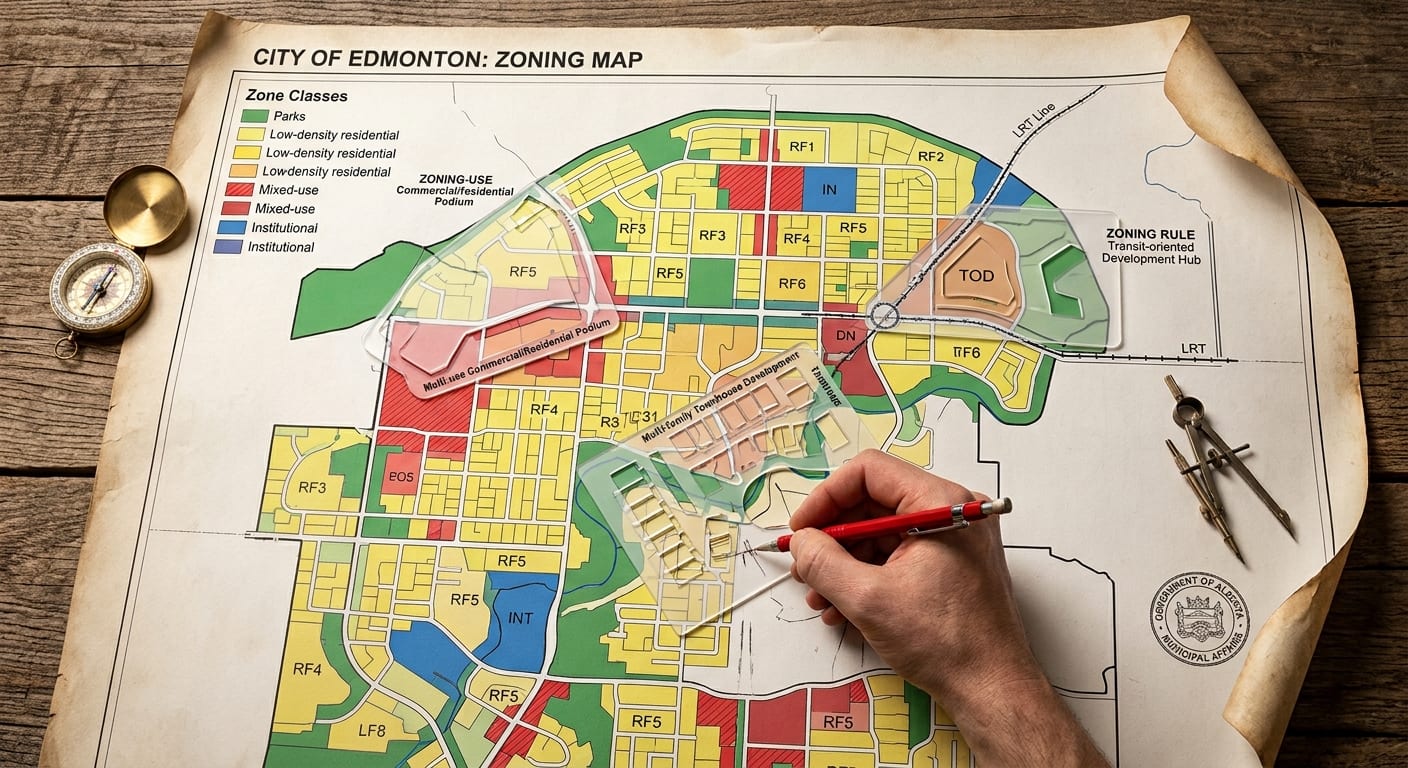
Oct 12, 2026
Alberta Zoning Rules Shaping Edmonton's Future: Parking and Density at a Crossroads
Alberta's Edmonton zoning bylaw rollback reinstates minimum parking requirements, raising urgent questions about housing affordability and city planning.
0 Comments
Join the conversation
Be the first to comment
Share your thoughts above.