
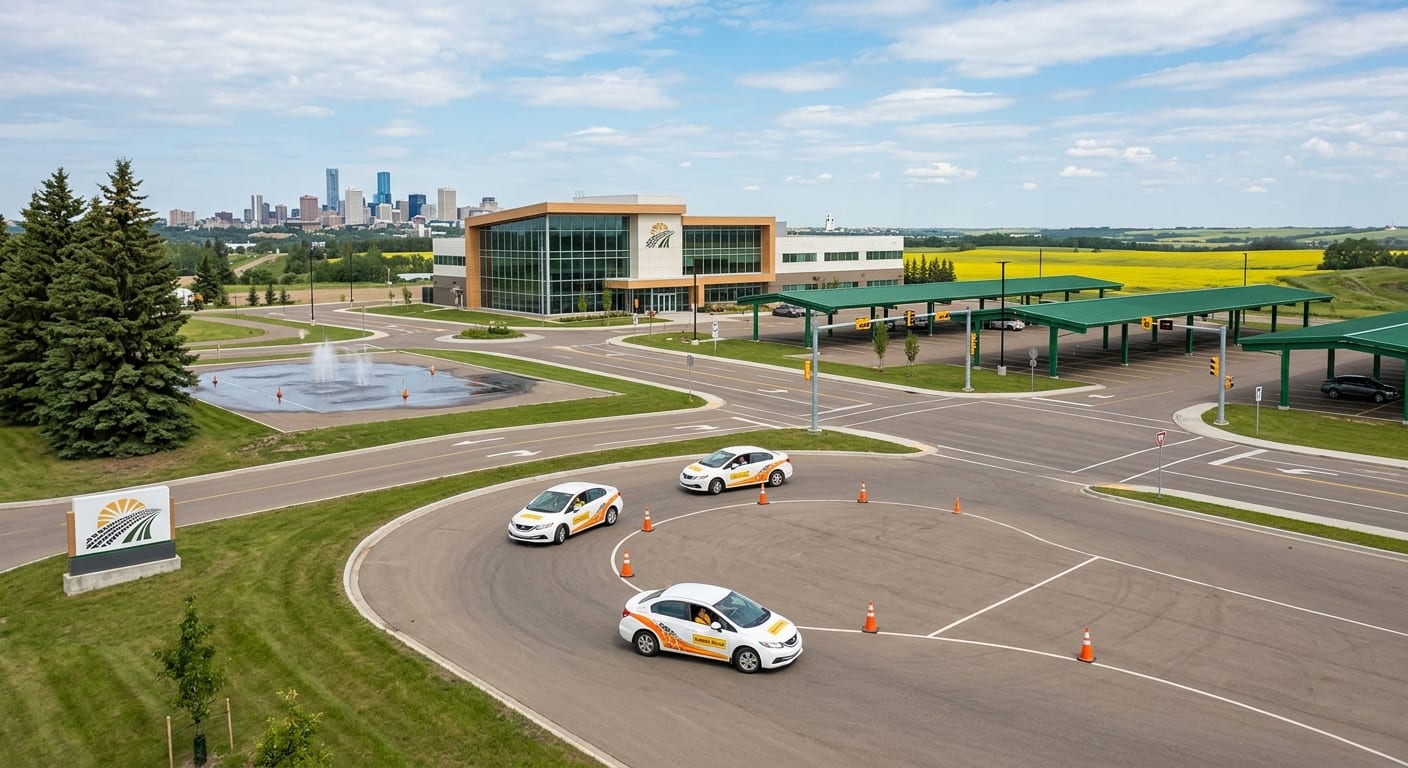
Beaumont Driving Safety Training Campus Gets $38.5M From Province
Backed by provincial funding infrastructure, the new driver training facility is set to serve the greater Edmonton region
Something significant is taking shape just south of Edmonton — and it has the potential to redefine how Alberta trains the people responsible for keeping its roads safe.
A new driving safety training campus is coming to Beaumont, Alberta, backed by a substantial commitment of provincial funding infrastructure that signals just how seriously the province is taking road safety, workforce development, and regional economic growth all at once.
The Alberta government has confirmed it will direct $38.5 million toward the City of Beaumont to build the foundational infrastructure needed to support the planned campus — including roads, utilities, and municipal servicing within Beaumont's emerging Innovation Park.
This is not a minor line item in a provincial budget.
It is a generational investment in community infrastructure, workforce readiness, and public safety — one that could shape the Edmonton metropolitan region for decades to come.
The facility at the center of this announcement is the Alberta Motor Transport Association Safety Campus, commonly referred to as the AMTA Safety Campus.
Once operational, it will deliver specialized, hands-on training for commercial drivers and law enforcement professionals — two groups whose skills are directly tied to how safely goods move across Alberta's highways and how effectively officers respond to high-risk situations on the road.
According to recent reports, the campus is planned for a 160-acre parcel of land within the Beaumont Innovation Park, positioned south of Highway 625, between Highway 814 and Range Road 241.
The location is deliberate.
Beaumont sits at a strategic crossroads in the Edmonton region — just minutes from the city's southern boundaries and roughly 16 kilometres northeast of Edmonton International Airport — making it an ideal hub for a training facility that will draw professionals from across the province.
The Innovation Park itself received a major planning milestone when its Area Structure Plan was formally approved in early 2025, outlining land use, utility servicing, and the transportation network needed to support development in the area.
That approval cleared a critical path for the driver training facility to move forward with far greater momentum than at any previous point in its planning history.
Officials confirmed that the provincial funding infrastructure commitment will lay the groundwork not only for the safety campus but also for attracting additional investment and complementary businesses to the Innovation Park corridor over the coming years.
In other words, the AMTA Safety Campus is expected to act as an anchor — the kind of flagship development that draws health sciences firms, technology companies, and safety-sector organizations to cluster nearby and build on the momentum that a major institutional tenant creates.
That spin-off effect could prove just as meaningful to Beaumont's long-term economy as the campus itself.
The facility's design concept includes a state-of-the-art driving track built to challenge operators across a range of real-world conditions — gravel roads, urban simulations, and variable-terrain environments — all engineered to push professional skill levels to where they need to be for the demands of Alberta's commercial transportation industry.
This goes well beyond a typical licensing course or classroom-based curriculum.
The goal is to produce drivers and law enforcement professionals capable of handling the unpredictable, high-pressure situations that Alberta roads routinely present — from winter highway driving on ice-covered stretches to managing large commercial vehicles through tight urban corridors where the margin for error is unforgiving.
The broader rationale behind the driving safety training campus is also tied to a very real and well-documented labour market challenge facing the province.
Alberta's commercial transportation industry has been grappling with driver shortages for years, and industry leaders have long identified training capacity as one of the most direct levers available to begin closing that gap in a meaningful way.
By building a dedicated driver training facility at scale — with purpose-built infrastructure, professional-grade equipment, and multi-use track configurations — the province and its industry partners are betting that a serious, credentialed training environment will accelerate the pipeline of qualified commercial drivers entering the workforce.
That pipeline matters deeply.
Alberta's supply chains, resource industries, and retail distribution networks all depend on a steady flow of skilled professional drivers — and a shortage in that workforce has ripple effects that reach every corner of the provincial economy.
Beaumont is no stranger to rapid growth, and the community's trajectory only adds to the significance of this announcement.
The city has earned the distinction of being the fastest-growing municipality in the Edmonton Metropolitan Region, with population projections suggesting it could approach 30,000 residents by 2030 and expand significantly further over the following decade and a half.
Building permits issued in 2025 alone have already outpaced full-year totals from the previous year — a remarkable pace that reflects the residential and commercial investment flooding into the community from across the region and beyond.
That growth trajectory makes Beaumont's emergence as a regional employment and innovation hub feel less like an ambitious long shot and more like a natural outcome of forces already in motion.
City leaders have framed the Innovation Park — and the safety campus within it — as central pillars of a long-term economic vision that reaches well beyond residential expansion and suburban development.
The idea is to build a community that does not just house people who commute into Edmonton but one that generates its own economic gravity — attracting employers, institutions, and specialized facilities that give residents genuine reasons to work, train, and invest locally rather than looking outward for opportunity.
The AMTA Safety Campus is one of the most concrete and high-profile expressions of that vision to date, and its approval sends a message about what kind of community Beaumont intends to become.
From a provincial standpoint, the investment also reflects a broader and increasingly deliberate policy direction around public safety infrastructure and professional training standards.
Officials have stated clearly that strong public safety outcomes depend on the quality of preparation that professionals receive long before they ever encounter a real emergency — and that the kind of preparation required cannot happen in improvised settings with inadequate equipment.
A facility like this one, anchored by serious provincial funding infrastructure and designed from the ground up for professional driver and law enforcement training, represents exactly the kind of upstream investment that prevents downstream costs in accident claims, emergency response failures, and workforce attrition.
No firm construction start date has been publicly confirmed as of this reporting, though the formal approval of the Innovation Park's Area Structure Plan in early 2025 removed one of the most significant planning obstacles standing between the vision and the first shovel in the ground.
The provincial funding commitment is structured to span multiple years, which signals that the government is treating this as a long-term infrastructure priority rather than a one-cycle announcement without follow-through.
For Beaumont residents and for the broader Edmonton region, the arrival of a project of this scale carries implications that stretch well beyond driver training and road safety alone.
It means construction employment during the build phase and sustained operational jobs once the campus is running at full capacity.
It means increased commercial activity around the Innovation Park corridor as businesses seek proximity to a growing, well-serviced regional hub with direct access to major provincial highways.
And it means that Beaumont's identity — long shaped by its welcoming small-town character, its officially bilingual French-heritage culture, and its reputation as a quiet escape from the urban sprawl — is quietly but decisively evolving into something considerably larger on the regional stage.
What was once a bedroom community on Edmonton's southern fringe is steadily becoming a destination community and economic center in its own right.
The driving safety training campus, backed by committed provincial funding infrastructure and anchored within a thoughtfully planned Innovation Park now years in the making, is one of the most visible signs yet that this evolution is not simply hoped for — it is already underway, and the greater Edmonton region is watching closely. |

Sep 24, 2026
Alberta Fuel Tax Pause: What Edmonton Drivers Need to Know Through 2027
Alberta's provincial fuel tax suspension saves 13 cents per litre at the pump. See what the Alberta fuel tax pause means for Edmonton through 2027.
Sep 21, 2026
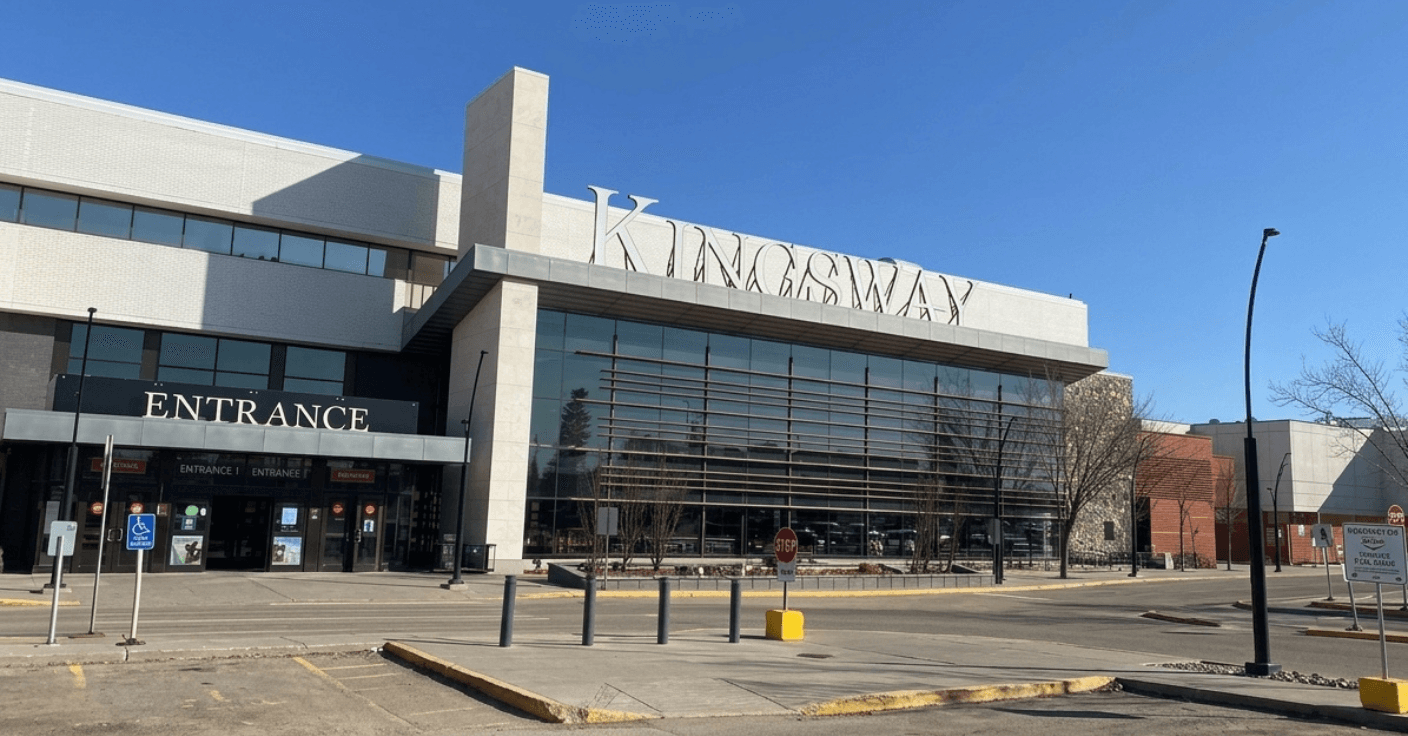
Kingsway Mall Sold: New Ownership Signals Fresh Chapter for Edmonton Alberta Landmark
Kingsway Mall sold after 26 years under Oxford Properties. Montreal's Westcliff takes over Edmonton's iconic 880,000-sq-ft shopping centre. What's next?
Sep 17, 2026
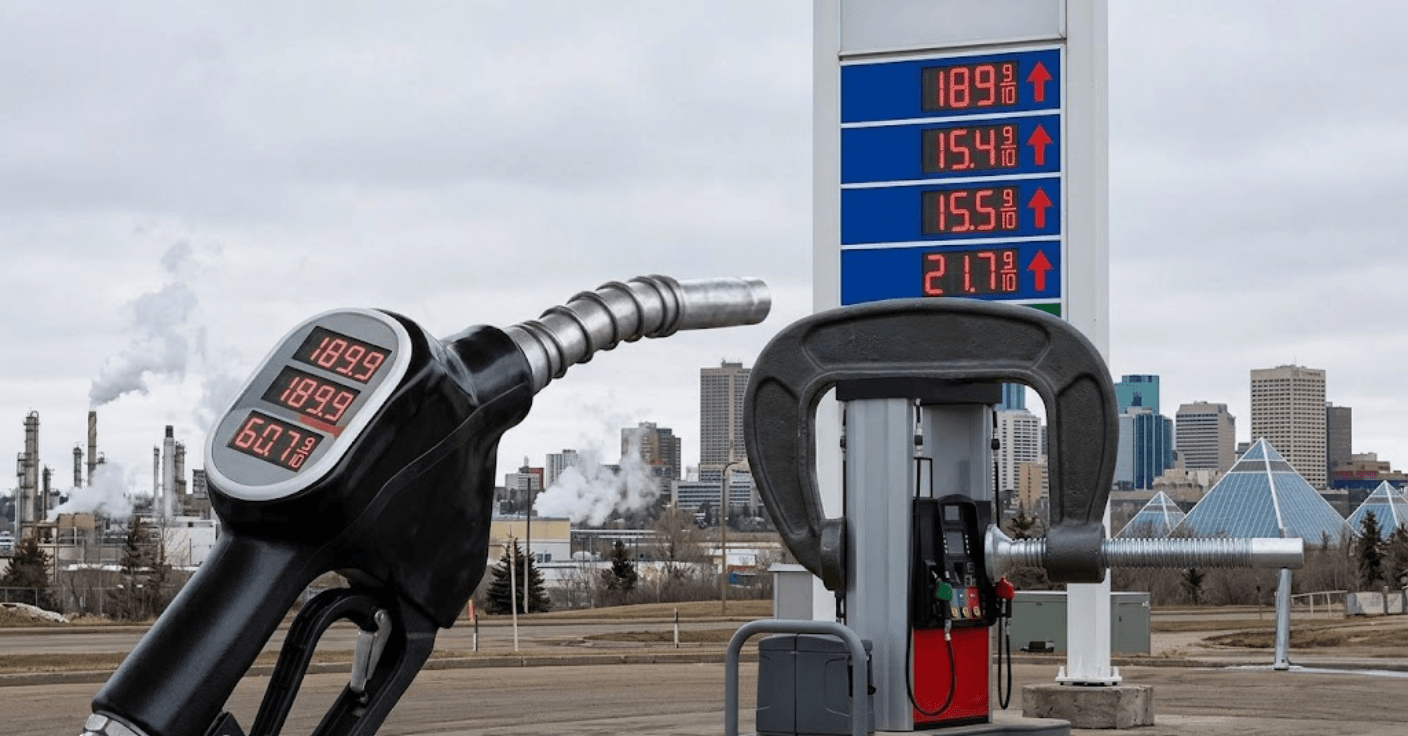
Gas Prices in Edmonton, Alberta Are Climbing Fast
Gas prices Alberta drivers pay are rising fast. See what's pushing Edmonton fuel prices higher and what it means for your wallet in 2025.
Sep 13, 2026
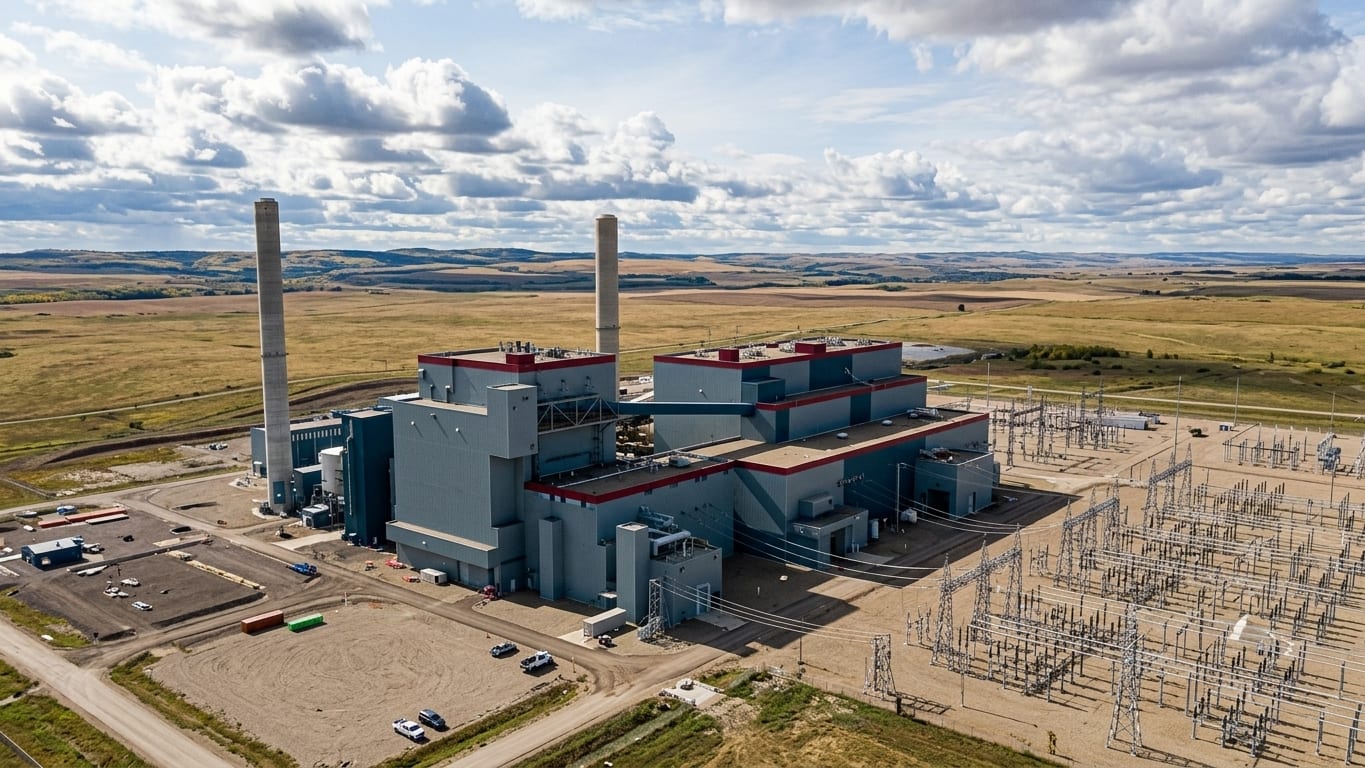
Carbon Capture Storage Hub Services in Edmonton, Alberta | CCS Hub Canada
Explore Alberta's expanding carbon capture storage hub network, from Edmonton's Wabamun project to the Origins CCS hub — Canada's largest CCS facility.
0 Comments
Join the conversation
Be the first to comment
Share your thoughts above.