
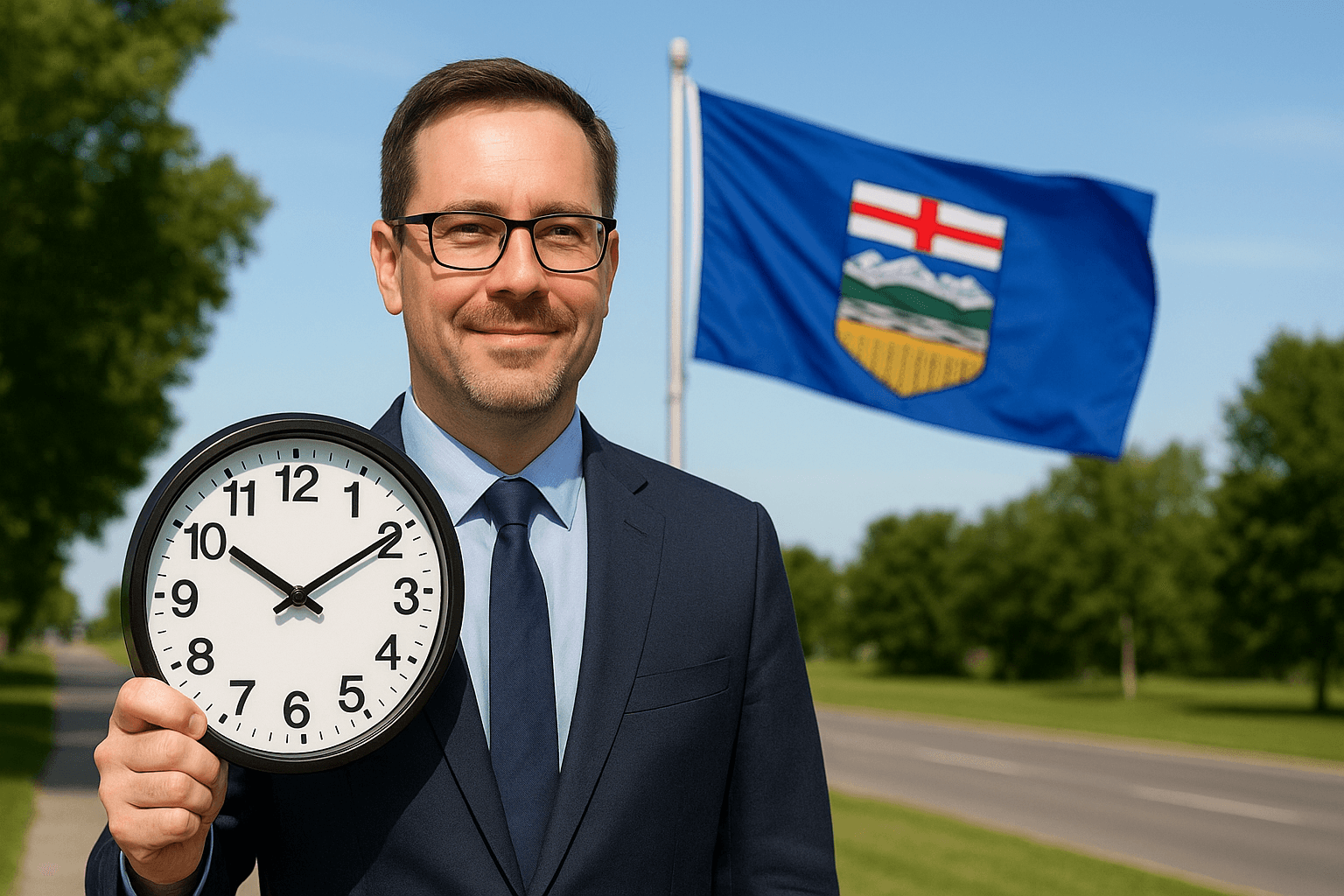
Alberta Officially Adopts Permanent "Alberta Time"
Covering no clock changes and permanent daylight saving for residents
Alberta time just became a little simpler for everyone in Edmonton and across the province.
Residents awoke Monday to the realization that the era of fiddling with clocks - springing forward and falling back - has finally ended.
After years of debate and community consultations, Alberta’s government took decisive action.
Permanent daylight saving is now the law of the land.
For many families, this means no more racing around twice a year trying to reset microwaves, car dashboards, and alarm clocks.
Schools across Edmonton have welcomed the move, citing reduced confusion for students and greater consistency for families managing busy schedules.
Locals were split for years over whether to stick to daylight time year-round - but the decisive step has now given everyone a clear answer.
Parents, in particular, have expressed relief.
Many hope that fewer disruptions in sleep patterns will help children better adapt to school routines.
This development brings Alberta in line with a growing number of places considering similar measures to end clock changes.
Recent reports from business leaders suggest that the switch to permanent daylight saving could boost productivity and make planning with partners in other provinces easier.
Some local tech start-ups point out that tech support and logistical issues are now simplified without the headaches of shifting time zones twice annually.
The change has also cast Edmonton in a new light, literally and figuratively, as longer evenings are now here to stay regardless of the season.
Landlords and property managers in central Edmonton say evening property viewings will be more convenient, particularly in winter months that often fell into darkness by late afternoon.
As outdoor patios, walking trails, and river valley parks become busier during longer summer evenings, many local businesses are seizing the opportunity to extend their hours and attract more visitors.
Local coffee shops, including some new faces on Jasper Avenue, are planning more evening events and community gatherings as a response to this new era of Alberta time.
The implications reach beyond just daily life, public safety is a major point of discussion.
Officials argue that no clock changes could reduce risk for commuters, especially during the early morning hours when grogginess often led to accidents following the traditional spring-forward adjustment.
Few would argue against the idea that an extra hour of reliable daylight can make evenings feel safer and more welcoming.
However, there has been some concern among residents about what permanent daylight saving might mean for the province’s agricultural sector.
Farming schedules have long revolved around natural light rather than clocks, and farmers interviewed at recent market days expressed both cautious optimism and a desire for more data as they monitor the change’s effects on routines and productivity.
Local school boards are responding proactively by adjusting bus schedules and after-school program timings to better align with consistent daylight hours.
Most students interviewed seem unphased by the change, but teachers insist that stability in Alberta time will improve attendance and academic focus in the long run.
Some community sports leagues, especially soccer and baseball for kids, are already updating registration kits and practice times to account for brighter evenings throughout the calendar year.
Edmonton’s bustling real estate market has also felt the ripple effect.
Several realtor groups reported increased interest in evening open houses and more flexibility for working families on flexible schedules.
New condo developments near Whyte Avenue and the Ice District are marking the change by installing outdoor lighting and community gathering spots to fully leverage the brighter, later evenings.
This shift toward permanent daylight saving hasn’t pleased everyone, though.
Some critics have voiced frustration, arguing that aligning with other provinces and territories could become more complicated for cross-border business and travel.
Particular attention is being paid by Edmonton International Airport staff who must now adjust scheduling and coordination with flights arriving from regions that rejected permanent changes.
Travel agencies expect a short transition period as residents and visitors recalibrate their plans—though most see benefits in the long run.
In political circles, Alberta’s decision is being watched nationally.
Nearby provinces have recently debated similar measures, and many are looking to Alberta as a bellwether for whether the policy improves quality of life and business efficiency.
Meanwhile, local mental health advocates note that steady daylight hours can play a role in preventing seasonal mood swings and fostering improved well-being during challenging winter months.
City council is already moving to synchronize municipal services, transit operations, and emergency response to permanent Alberta time.
One Edmonton emergency services planner pointed to potential savings and fewer technical glitches since systems no longer need bi-annual reprogramming.
According to conversations with residents in Glenora and Mill Woods, the biggest upside continues to be the peace of mind that comes with knowing Alberta time is settled once and for all.
“It’s a small change, but it just makes life that much smoother,” one longtime resident shared at a downtown community event.
As the city adjusts, businesses involved in wellness and recreation see new opportunities ahead.
Fitness studios are launching more outdoor classes for those keen to make the most of every last minute of sunlight.
Community halls are extending hours, and summer events are being reimagined with new schedules to reflect Alberta’s commitment to permanent daylight saving.
City planners predict the longer daylight could encourage more people to walk, cycle, and play outdoors, driving up the use of city parks and pathways.
This could also benefit small businesses catering to residents enjoying extended evenings and families gathering after work.
While it remains to be seen how the change will impact long-term local commerce or cross-border relations, most Edmontonians appear to embrace this new approach to time.
As the sun sets a little later each night, Edmonton settles into its new routine—a community no longer ruled by the ticking hands of the clock. |

Sep 17, 2026
Gas Prices in Edmonton, Alberta Are Climbing Fast
Gas prices Alberta drivers pay are rising fast. See what's pushing Edmonton fuel prices higher and what it means for your wallet in 2025.

Sep 13, 2026
Carbon Capture Storage Hub Services in Edmonton, Alberta | CCS Hub Canada
Explore Alberta's expanding carbon capture storage hub network, from Edmonton's Wabamun project to the Origins CCS hub — Canada's largest CCS facility.

Sep 10, 2026
Meta AI Data Centre Coming to Edmonton Alberta | Sturgeon County Project
Meta AI data centre in Sturgeon County is reshaping Edmonton Alberta's economy with 3,000+ jobs and a $13B investment in Canada's AI future.

Sep 7, 2026
Shop Local in Edmonton: Supporting Local Businesses for a Thriving Community
Discover how Edmonton's shop local movement boosts local business support and small business growth for a resilient community.
0 Comments
Join the conversation
Be the first to comment
Share your thoughts above.