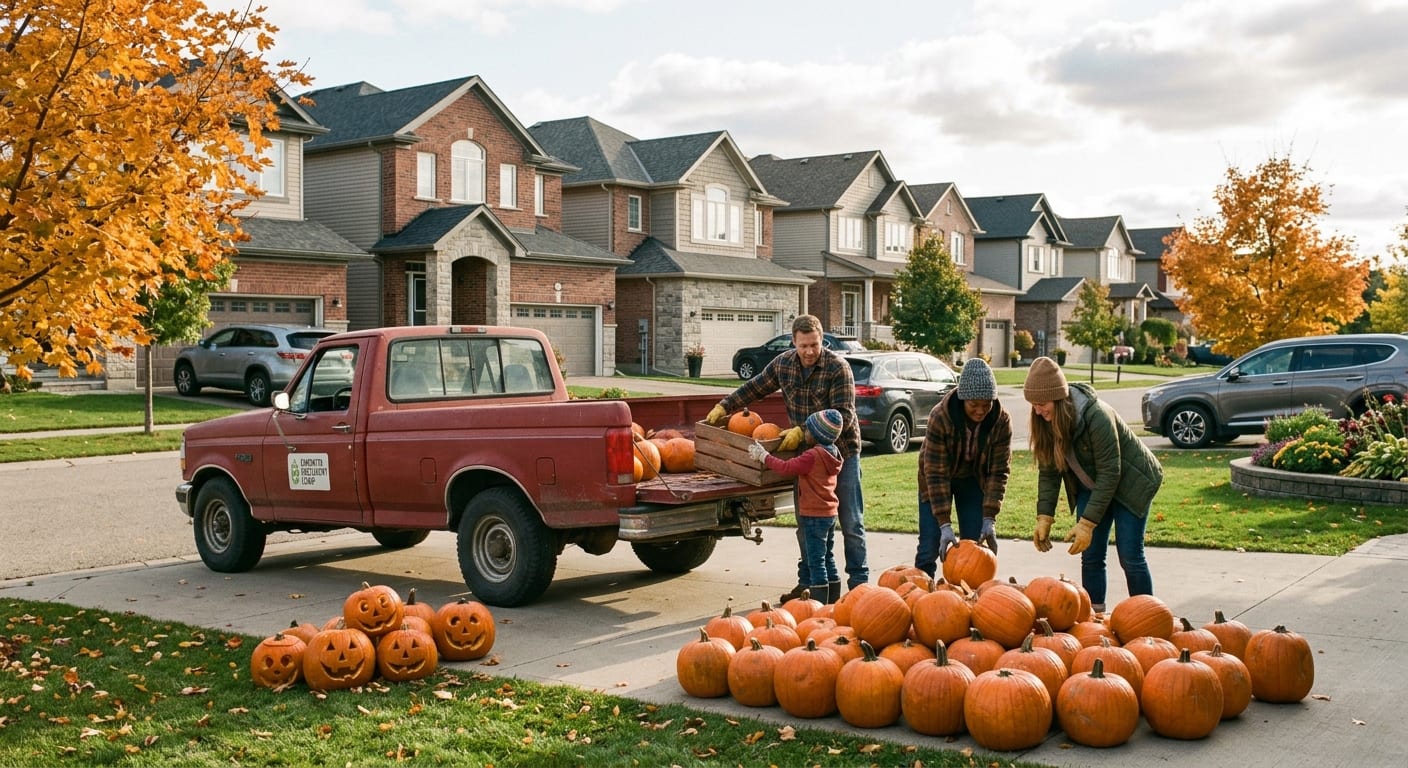
Earth’s Refillery Coop ran a successful post-Halloween "pumpkin rescue" drive, collecting leftover jack-o'-lanterns to feed rescued farm animals in the surrounding area.
Supporting Halloween pumpkin donation efforts to nourish rescued farm animals in the surrounding area
Every year, the days following Halloween leave porches across Edmonton dotted with sagging jack-o-lanterns that nobody quite knows what to do with.
They slump against doorframes, quietly decomposing, headed for the green bin or worse — the landfill.
But a local cooperative rooted in sustainability and community values has been changing that narrative, one donated gourd at a time.
Earth's Refillery Coop, nestled on 95th Street in Edmonton's inner city, ran one of the most wholesome post-Halloween initiatives the city has seen — a full-scale pumpkin rescue drive designed to divert discarded decorative gourds away from waste streams and straight into the eager snouts of rescued farm animals living in the region.
The program, known as Pumpkins for Pigs, invited Edmonton residents to bring their leftover jack-o-lanterns to the cooperative as a convenient drop-off point, with collected pumpkins then transported to a farm animal sanctuary south of the city.
The beneficiary of this edible generosity was the Farm Animal Rescue and Rehoming Movement, more commonly known as FARRM — an animal sanctuary located near Wetaskiwin that has served as a lifelong refuge for surrendered, neglected, and abused farm animals since its founding in 2013.
FARRM is home to pigs, goats, cattle, cats, and a rotating community of animals that arrived broken and leave beloved — and during the post-Halloween season, pumpkins are more than just a novelty treat for the residents there.
They are a genuine source of nourishment at a time of year when fresh, affordable produce is harder to come by for a small sanctuary operating almost entirely on community goodwill.
The concept behind the Halloween pumpkin donation drive is straightforward in the best possible way: rather than allowing hundreds of seasonal gourds to rot on curbs or clog composting facilities, a simple collection effort redistributes that food energy to animals who genuinely benefit from it.
Pigs, in particular, go absolutely wild for pumpkin — the flesh, the seeds, the rind — and what feels like a tired decoration to a human household feels like a feast to a rescue animal that may have never known abundance.
The owner of Earth's Refillery Coop spoke plainly about the motivation: a lot of pumpkins are thrown away at this time of year, and the goal is simply to divert a portion of them to animals who need the calories.
That simple, earnest reasoning captures something that larger sustainability campaigns often struggle to communicate — that individual action, even on the smallest scale, adds up to something genuinely meaningful.
Edmonton has no shortage of post-Halloween pumpkin disposal options.
The city has hosted its beloved annual Pumpkin Smash event at Borden Park, where residents can catapult their gourds from hydraulic lifts, watch composting trucks in action, and learn about backyard composting — a crowd-pleasing way to manage the surge of post-October organic waste that hits the city every November.
It is a genuinely fun event, and composting is a responsible outcome, but there is something uniquely powerful about a path that takes a discarded decoration and turns it directly into a meal for a living creature.
That is the emotional core of the pumpkin rescue drive — not just waste diversion, but an act of connection between urban residents and the animals living at the margins of the agricultural world just beyond city limits.
Earth's Refillery Coop itself is no ordinary shop.
The cooperative operates as a community-owned hub selling ethically sourced food, beverages, and refillable household goods — a philosophy built around reducing consumption and rethinking what it means to participate in a local economy.
It sits adjacent to a beloved independent bookstore in a stretch of Edmonton that has quietly become a destination for residents who want their purchasing decisions to reflect their values.
Running a Halloween pumpkin donation drive is entirely consistent with the cooperative's broader ethos — practical sustainability that requires no sacrifice, just a small shift in habit and a willingness to see resources differently.
FARRM, for its part, has been collecting donated pumpkins from across the Edmonton region for several seasons, making the sanctuary one of the most community-integrated farm rescues in Alberta.
All of the pigs currently living at FARRM were rescued from in and around Edmonton — found abandoned, surrendered by owners who could no longer care for them, or removed from situations of neglect and abuse.
Each one carries a story that most passersby would never guess, and each one deserves a soft pile of pumpkin on a cool November afternoon.
The sanctuary has recently been fundraising to build a new barn on newly acquired land outside of Edmonton — a move that signals growth and a deepening commitment to expanding capacity for animals in need across the region.
Community support — whether through monetary donations, volunteering, or simply dropping off a holiday pumpkin — is what keeps an operation like FARRM running year after year.
The pumpkin rescue drive, modest as it may appear, is part of a larger ecosystem of local care that Edmonton has been quietly building for years.
Alberta is not typically the province that gets celebrated for progressive animal welfare culture, but the story unfolding in and around Edmonton tells a different tale — one driven by cooperative businesses, volunteer-run sanctuaries, and residents who keep showing up with their leftover gourds and their goodwill intact.
Nationally, the scale of Halloween pumpkin waste is genuinely staggering.
Tens of millions of pumpkins are discarded across North America in the weeks following October 31st, the vast majority ending up in landfills where they produce methane as they decompose — a greenhouse gas far more potent than carbon dioxide over the short term.
Programs like the one run by Earth's Refillery Coop may only capture a fraction of that waste, but they model something critically important: that the solution does not always require a government mandate or a corporate initiative.
Local businesses, grassroots organizations, and informed residents can build circular systems that work without waiting for anyone's permission or top-down direction.
What makes the Edmonton effort particularly worth watching is its scalability.
The Pumpkins for Pigs model does not require a large budget, a fleet of trucks, or a municipal contract — it requires a willing storefront, a community that pays attention, and a sanctuary prepared to receive.
In a city that generated significant media attention for its annual Pumpkin Smash composting event, the quieter parallel story of pumpkins becoming pig feed deserves equal recognition.
Both approaches tackle the same problem from different angles, and both reflect an Edmonton that is increasingly serious about the environmental cost of its seasonal habits.
Animal sanctuaries like FARRM also play an underappreciated role in regional food literacy — they remind urban residents that the food system does not begin at a grocery store shelf and does not end at a compost bin.
It passes through farms, through animals, through seasons, and through communities making deliberate choices about what gets wasted and what gets saved.
The rescued farm animals living at sanctuaries south of Edmonton are, in a very real sense, the beneficiaries of a city learning to close its loops.
For Edmonton families wondering what to do with the carved pumpkin still sitting on their stoop well into the first week of November, the answer has never been more straightforward or more rewarding.
Drop it off, watch it go to work, and know that somewhere south of the city, a rescued farm animal is about to have the best day of the season. That is what a pumpkin rescue drive looks like when it is done right — no fanfare, no bureaucracy, just a community feeding its own. |
Nov 4, 2026
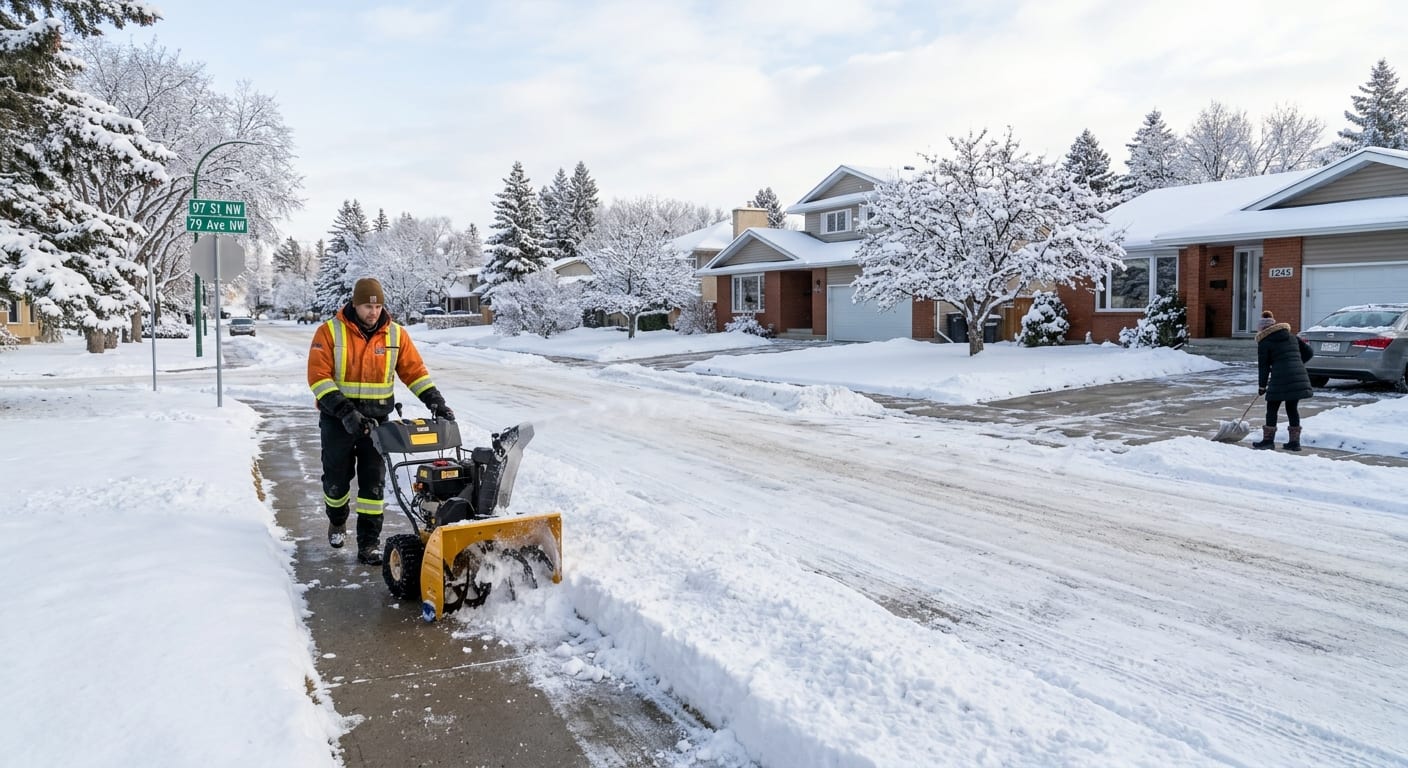
Residential Snow Clearing Standard in Edmonton, Alberta — What Homeowners Need to Know
Learn about Edmonton's residential snow clearing standard, the new snow removal policy, and the 12-day snow clearing rule every homeowner must understand.

Oct 29, 2026
Optometrist Surgical Procedures Now Available in Edmonton, Alberta
Edmonton optometrist surgical procedures are expanding. Laser eye procedures and minor eye surgery now offered in local Alberta clinics starting 2026.
Oct 26, 2026
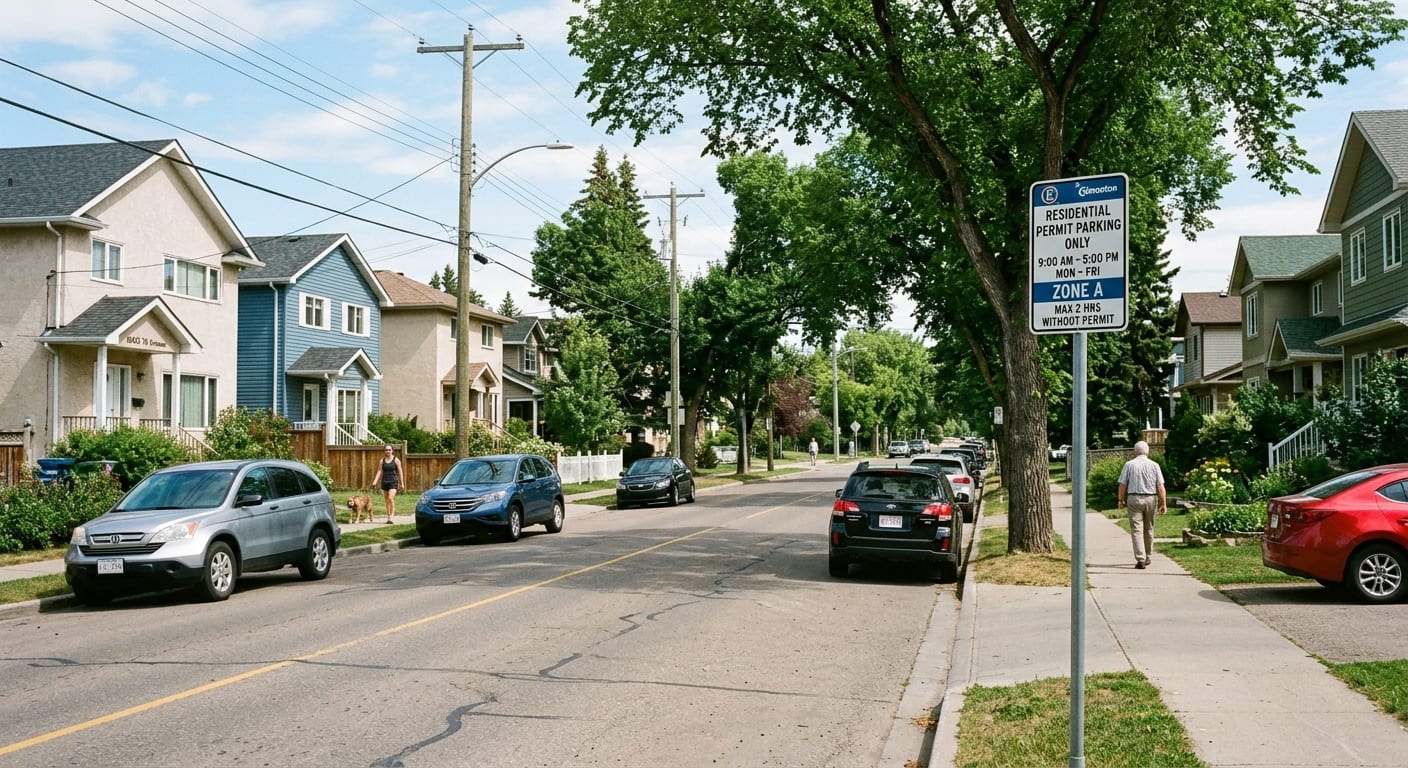
Residential Street Parking Rules in Edmonton, Alberta | What Residents Must Know
Residential street parking in Edmonton is changing. Learn the latest parking rules for residents and street parking regulations shaping your neighbourhood.
Oct 21, 2026
Edmonton City Budget 2025: What Residents Need to Know About the Draft Four-Year Budget
Edmonton city budget 2025 explained: draft four-year budget drops Nov. 2, hearings begin Nov. 23, and Edmonton electricity rates rise in 2027.
0 Comments
Join the conversation
Be the first to comment
Share your thoughts above.