
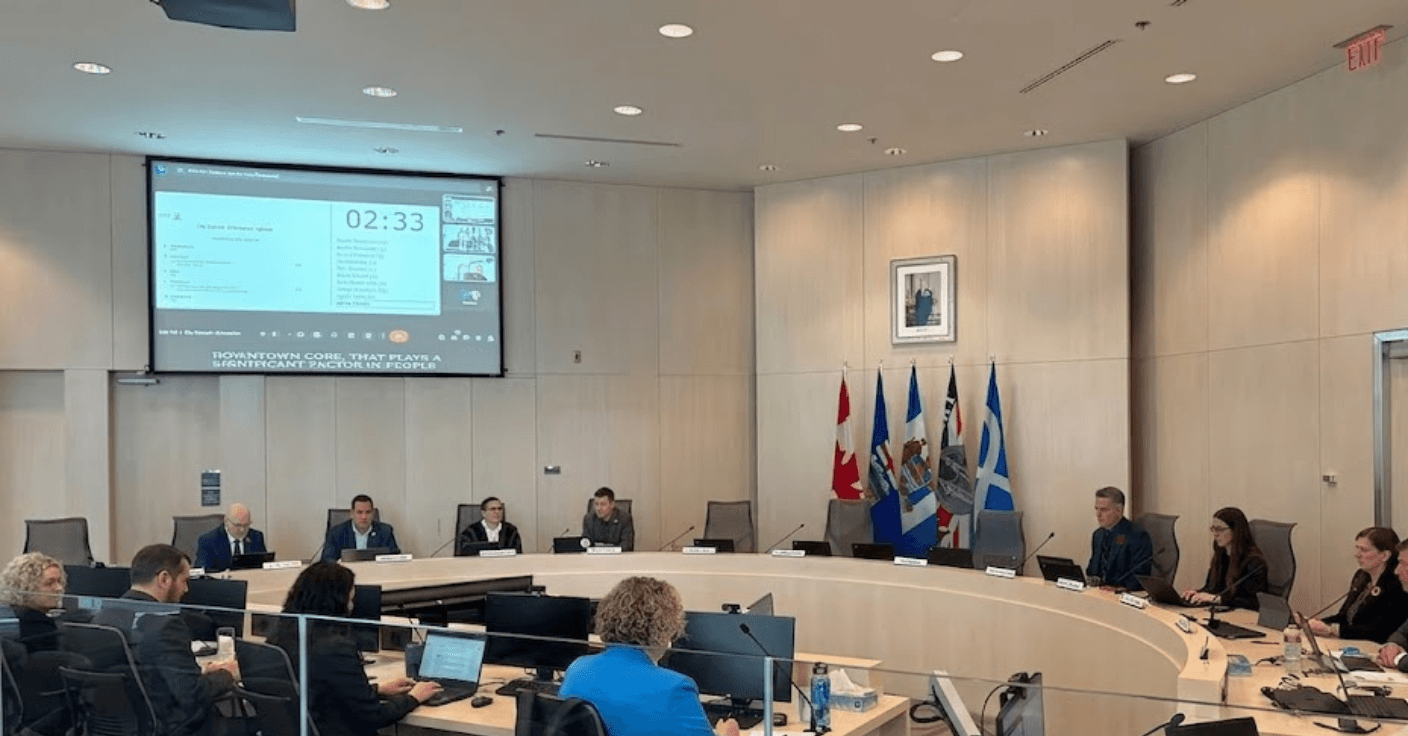
Council Approves $925,000 for Winter Day Spaces
Covering winter day spaces and the expanded Southeast Transit Garage approved alongside city funding
Few decisions coming out of Edmonton City Hall carry as much weight — or stir as much debate — as how the city chooses to spend its money on public safety and infrastructure.
This week, those choices came into sharp focus as council moved through a dense slate of budget adjustments touching three distinct but deeply connected priorities: the Edmonton Police Service budget, the future of winter day spaces for vulnerable residents, and the size and scope of the long-debated Southeast Transit Garage.
Taken together, the decisions signal a city grappling with some of its most fundamental questions — who gets protected, who gets served, and what kind of infrastructure Edmonton is willing to go into debt to build.
The Edmonton Police Service remains the single largest line item in the city's operating budget, consuming more than fourteen percent of the city's total operating expenditures — a portion that dwarfs virtually every other department in the municipal structure.
The police budget currently sits at approximately $464 million for 2025, a figure that has climbed steadily over recent years under a structured funding formula that council approved to give the service greater financial predictability from year to year.
That predictability, however, has come at a cost that not everyone on council has been comfortable paying.
Budget documents prepared for council indicate that fulfilling the ongoing mandate of the Edmonton Police Service requires an increase in expenses of approximately $9.2 million in 2026, with incremental additions projected into subsequent years as the service continues to grow alongside the city.
The service's budget is expected to grow by more than twelve percent between 2023 and 2026 — a trajectory that some councillors have questioned, particularly when measured against much smaller increases allocated to other city services like the public library system.
Supporters of continued investment in the Edmonton Police Service budget point to community safety outcomes and the real cost of recruiting, retaining, and equipping officers in a city that is growing faster than most of its prairie counterparts.
Officials have noted that the predictable funding formula allows the service to deploy resources strategically rather than scrambling year to year in response to unpredictable budget swings that make long-term planning nearly impossible.
Critics, meanwhile, argue that a department absorbing this much of the city's budget should face the same line-by-line scrutiny applied to every other municipal department — an accountability gap that some councillors have tried to close through targeted motions and commission reviews.
That tension surfaced again during recent deliberations, even as council simultaneously faced pressure to fund essential community programs that address the city's most visible and urgent social challenges.
Among the most widely supported decisions this budget cycle was the allocation of nearly $925,000 to fund winter day spaces Edmonton residents experiencing homelessness depend on to survive the coldest months of the year.
The funding extends programming at four established sites operated by community organizations working directly with the city's homeless population, including day spaces in the downtown core and scattered across the city's west end.
Those sites, which serve both as warming centres and community hubs, collectively logged more than 6,600 visits during the previous winter season — a figure that underscores just how critical these spaces have become in Edmonton's social safety net.
The initiative traces back to one of the very first actions taken by the current council, when a motion was carried unanimously to allocate one million dollars toward expanding daytime shelter access — a clear signal that the new council viewed this issue as foundational, not peripheral.
Boyle Street Community Services used that initial injection of city funding to keep their day space open twelve hours a day, seven days a week through the winter months — extended hours that made a tangible difference in how many people could access warmth, food, and connection.
Between December and March, that single location alone absorbed thousands of visits from individuals who had nowhere else to go during the hours between morning shelter closures and evening re-entry.
Inside those spaces, the reality is not simply bodies kept warm — it is a community holding itself together through conversation, shared meals, and the quiet dignity of having a door open for you.
The renewed funding for winter day spaces Edmonton residents rely on reflects a broader recognition at city hall that the crisis of homelessness does not pause for budget deliberations, and that ignoring it quietly carries its own mounting costs.
Advocates have long argued that daytime shelter access reduces pressure on libraries, transit stations, and emergency services — effectively making the investment a cost-sharing measure that benefits the entire city, not just those walking through the door each morning.
That framing appears to be gaining real traction with councillors who might otherwise resist new spending during a period of intense fiscal pressure.
The backdrop to all of this is a city facing a significant gap between the services Edmontonians expect and the revenue available to fund them, with council having approved a nearly seven percent municipal property tax increase for 2026 to help close that widening divide.
Into this already complicated fiscal picture came one of the most contentious infrastructure votes of the budget session: the question of how large to build the Southeast Transit Garage in the city's southeast quadrant.
The project, designed to store and maintain Edmonton's growing fleet of zero-emission buses, had been scaled back in the spring after city staff flagged ballooning construction costs that threatened to push it far beyond its original budget.
Administration recommended reducing the garage's capacity from the originally planned 430 buses down to somewhere between 255 and 290 buses — a significant cut aimed at keeping the project within a $367-million budget envelope that would avoid additional borrowing.
Transit advocates pushed back hard, arguing that shrinking the garage now would permanently constrain Edmonton's ability to expand bus service for an entire generation of riders.
Representatives from transit rider organizations warned council that decisions of this magnitude are not simply four-year choices — they are fifteen- and twenty-year commitments, and underbuilding today means scrambling to catch up at a far greater cost tomorrow.
In a narrow and closely watched vote, Edmonton City Council sided with the advocates, approving the expanded Southeast Transit Garage in a 7-6 decision that came after days of deliberations.
The price of scaling back up: an additional $66 million in municipal borrowing, with the completed garage now expected to be fully operational by 2032.
It is a significant bet on the future of transit in a city that has increasingly signalled its intent to move away from car dependency — but it is a bet that will cost Edmontonians real money in the years ahead.
The southeast transit garage Edmonton is building is designed to accommodate a fully zero-emission fleet, incorporating both battery electric and hydrogen fuel cell technology — placing the city among a select number of Canadian municipalities actively building the infrastructure needed for the next generation of public transit.
The garage was always going to be a long-term infrastructure play, and council's decision to restore its original scope suggests a willingness to absorb short-term financial pain in exchange for what supporters describe as a more resilient and capable transit system over the coming decades.
Councillors who backed the larger version argued that affordability and long-term planning must be weighed together — that cutting corners on core infrastructure is itself a form of fiscal irresponsibility, one whose costs simply arrive later and at a much larger scale than any savings realized today.
Those who voted against warned that taking on another $66 million in debt during an already stretched budget cycle represents a genuine risk, particularly as rising property taxes continue to place pressure on homeowners and renters across all parts of Edmonton.
What emerges from all three decisions — the Edmonton Police Service budget, the winter day spaces Edmonton programs depend on, and the expanded Southeast Transit Garage — is a portrait of a city making high-stakes choices without the luxury of easy answers or unlimited resources.
Each vote reflects a different theory of what a growing city owes its residents: the security of policing, the compassion of shelter, and the daily utility of transit that connects communities to opportunity.
Edmonton is not the only city navigating these tensions, but the pace and scale of its growth make every decision feel more consequential than usual — and more difficult to reverse once made.
None of it is cheap, and none of it is simple — but together, these decisions will define what Edmonton looks and feels like for the decade ahead, and who gets to benefit from the city that emerges. |
Sep 13, 2026
Carbon Capture Storage Hub Services in Edmonton, Alberta | CCS Hub Canada
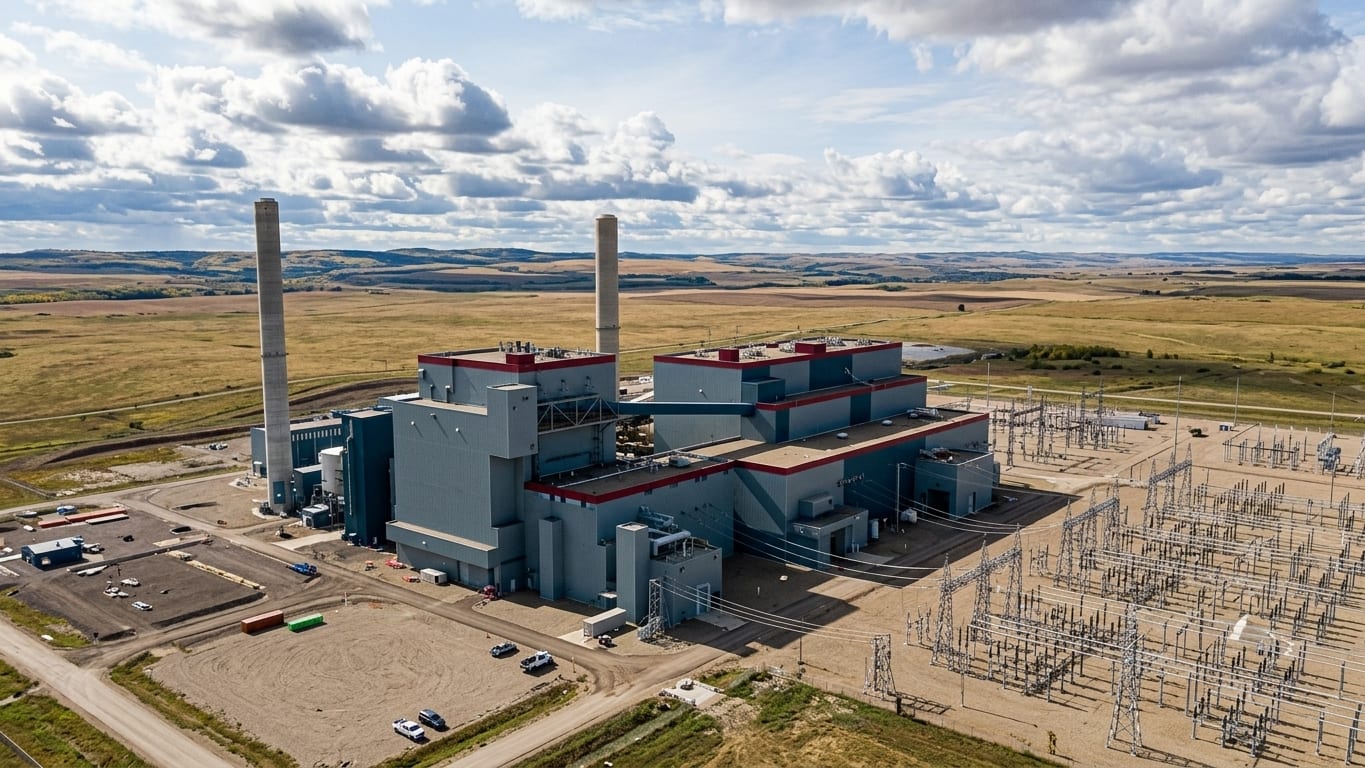
Explore Alberta's expanding carbon capture storage hub network, from Edmonton's Wabamun project to the Origins CCS hub — Canada's largest CCS facility.

Sep 10, 2026
Meta AI Data Centre Coming to Edmonton Alberta | Sturgeon County Project
Meta AI data centre in Sturgeon County is reshaping Edmonton Alberta's economy with 3,000+ jobs and a $13B investment in Canada's AI future.

Sep 7, 2026
Shop Local in Edmonton: Supporting Local Businesses for a Thriving Community
Discover how Edmonton's shop local movement boosts local business support and small business growth for a resilient community.

Sep 2, 2026
International School Trips in Edmonton: EPSB Cancels Overseas Travel
Edmonton public schools announce school trip cancellations for international school trips, impacting students and teachers across the district.
0 Comments
Join the conversation
Be the first to comment
Share your thoughts above.