
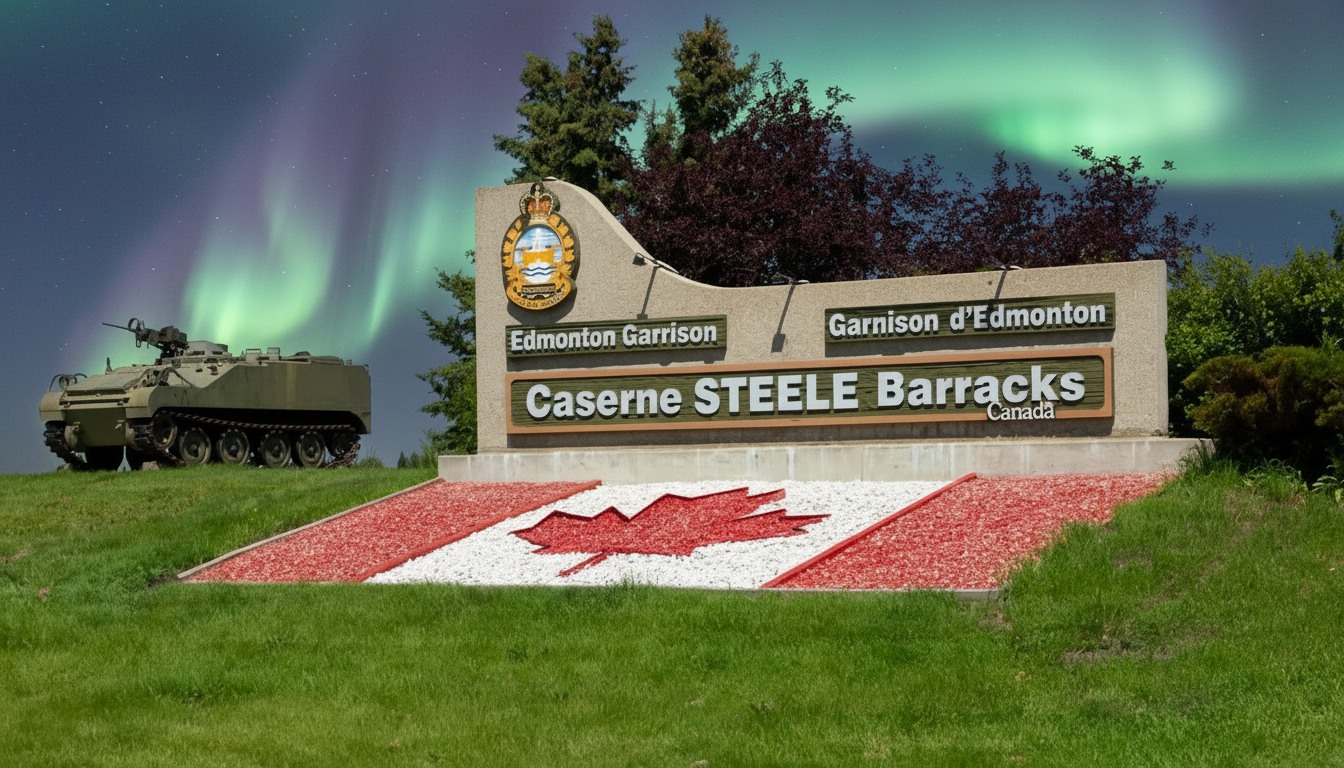
"Inside Canada's Military Makeover: Unveiling the Future of the Armed Forces"
Unveiling the Canadian Armed Forces: Inside their evolving structure and future strategy
The Canadian Armed Forces (CAF) is Canada’s unified military institution, responsible for defending the country, cooperating with the United States in continental defence, and contributing to international peace and security alongside allies.
It comprises three environmental services - the Royal Canadian Navy (RCN), the Canadian Army, and the Royal Canadian Air Force (RCAF) - supported by joint commands, specialized capabilities, and a civilian Department of National Defence that provides policy direction and oversight.
A brief historical arc
How the CAF is organized
Core missions
The 2024 Defence Policy Update and what it changes In April 2024, Canada released a comprehensive defence policy update - Our North, Strong and Free (ONSAF) - to refocus the CAF on credible deterrence at home and across North America while sustaining carefully chosen global commitments.
The policy adds new money, accelerates procurement and innovation, and prioritizes the Arctic and the broader northern approaches. It also commits to periodic policy refreshes to keep pace with a fast-changing threat landscape.
Over the next five years, the government plans to invest $8.1 billion in new defence funding, rising to $73 billion over 20 years, with a commitment to reach 2% of GDP on defence by 2032 as further investments come online.
The update also emphasizes people-first initiatives (housing, childcare, culture change and inclusion), procurement reform, digital transformation, and building a more resilient domestic defence industrial base.
A special focus is the Arctic and continental defence ONSAF outlines new Northern Operational Support Hubs to improve year-round CAF presence and responsiveness in the North, and aligns with a multi-decade plan to modernize NORAD sensors, command-and-control, and infrastructure. Canada’s departmental planning highlights roughly $38.6 billion over 20 years for NORAD modernization activities, underpinning radar, communications, and infrastructure upgrades that make the continent more resilient to new threats.
Infrastructure to receive and operate Canada’s future fighter jets across bases and northern forward operating locations - known as the Defence of Canada Fighter Infrastructure project - is also underway to enable F-35 operations nationwide.
Modernization: what’s actually being bought and when The modernization portfolio is broad, touching sea, land, air, and space.
Key near- and mid-term programs include:
Defending North America and the Arctic The CAF’s mission set has shifted toward persistent surveillance, deterrence, and credible defence in the North and across the continent.
This includes:
Operations at home At home, the CAF routinely supports provinces and territories during wildfires, floods, and other emergencies through rapid deployment of engineers, airlift, helicopters, and logistics.
The search and rescue enterprise - anchored by CH-149 Cormorants, the incoming CC-295 Kingfisher fleet, and RCAF fixed-wing transports - operates across some of the world’s most challenging geography and weather to save lives at sea, in the mountains, and in remote communities. The Navy’s AOPS expand the government’s toolset for Arctic presence, constabulary support, and humanitarian assistance in northern waters.
International commitments Canada balances domestic and continental priorities with targeted global contributions. The CAF remains a committed NATO ally, with forces regularly deploying to Europe for training and deterrence, including land, air, and maritime rotations.
At sea, RCN ships integrate into NATO task groups and coalition operations; in the air, the RCAF contributes air policing and airlift; on land, the Army provides high-readiness formations for allied exercises and missions. ONSAF’s emphasis is to sustain meaningful, interoperable contributions aligned with Canada’s interests and capabilities while modernizing for higher-end deterrence at home.
People, culture, and the institution The CAF’s future effectiveness rests on its people. ONSAF commits to concrete measures that support members and their families: a CAF Housing Strategy to rehabilitate and build accommodation, better access to affordable childcare on bases, and accelerated culture change with a focus on dignity, inclusion, and professional excellence.
The policy also targets recruitment and retention through modernized career pathways, training, and benefits tailored to a more diverse force, coupled with initiatives to streamline procurement, digitize business processes, and collaborate more closely with Canada’s defence industrial base.
Key challenges
What to watch over the next decade
Simple takeaway The CAF is modernizing around a clear hierarchy: defend Canada and North America first, then deliver targeted, interoperable contributions abroad. New fighters, patrol aircraft, ships, tankers, drones, and NORAD infrastructure will give Canada a credible deterrent posture across its vast geography - especially the Arctic - while people-first reforms aim to rebuild and sustain the force that operates it all
In more detail Canada’s 2024 defence policy update links strategy, people, and capabilities in a long-term plan with defined investments and review cycles to keep the CAF relevant. It brings near-term funding, commits to reaching NATO’s 2% target by 2032, accelerates projects already in motion, and concentrates effort where
Canada can make the biggest difference: persistent presence and situational awareness in the North, resilient continental defence alongside the U.S., and credible, focused contributions to allied operations overseas.
The road ahead is demanding - staffing, procurement speed, industrial capacity, and infrastructure all matter - but the direction is clear and resourced, with milestone deliveries across air, sea, and joint domains over the next five to ten years.
|
Sep 13, 2026
Carbon Capture Storage Hub Services in Edmonton, Alberta | CCS Hub Canada
Explore Alberta's expanding carbon capture storage hub network, from Edmonton's Wabamun project to the Origins CCS hub — Canada's largest CCS facility.

Sep 10, 2026
Meta AI Data Centre Coming to Edmonton Alberta | Sturgeon County Project
Meta AI data centre in Sturgeon County is reshaping Edmonton Alberta's economy with 3,000+ jobs and a $13B investment in Canada's AI future.

Sep 7, 2026
Shop Local in Edmonton: Supporting Local Businesses for a Thriving Community
Discover how Edmonton's shop local movement boosts local business support and small business growth for a resilient community.

Sep 2, 2026
International School Trips in Edmonton: EPSB Cancels Overseas Travel
Edmonton public schools announce school trip cancellations for international school trips, impacting students and teachers across the district.
0 Comments
Join the conversation
Be the first to comment
Share your thoughts above.