
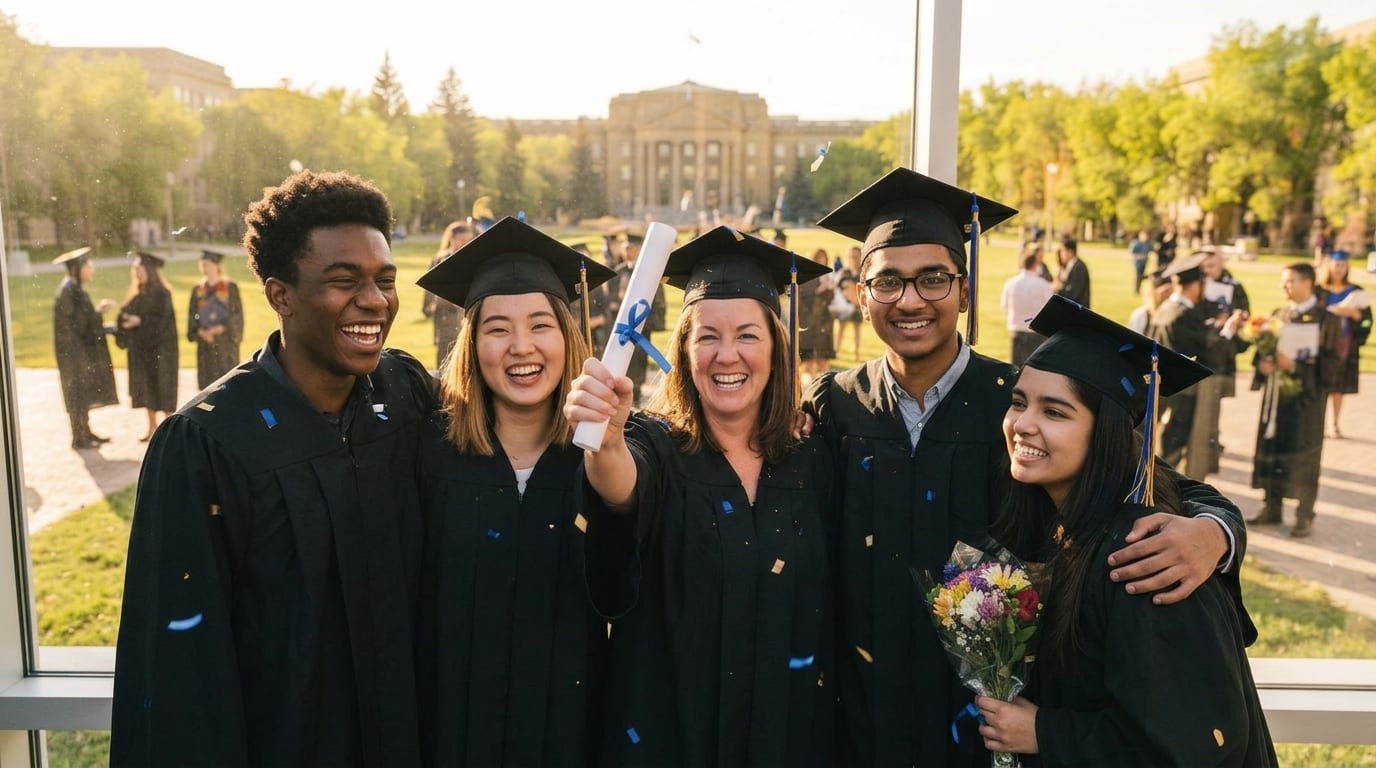
Overhaul of High School Graduation Requirements
What the Alberta graduation requirements overhaul means for local students and post-secondary paths
Something significant is shifting inside Edmonton's high schools — and not everyone is comfortable with where it is heading.
The province has announced a sweeping overhaul of Alberta graduation requirements, a change that is already dividing classrooms, staffrooms, and kitchen tables across the city.
At its core, the new framework reduces the number of mandatory academic courses students must complete to earn their diploma, while simultaneously expanding requirements in physical education, wellness, and financial literacy.
For Edmonton families watching the announcement unfold, the question hanging in the air is a heavy one: will this open doors for students, or quietly close them before they even realize it?
Under the current system, graduating students must complete one full-year Grade 12-level class in each of language arts and social studies, along with at least one full-year class in Grade 11 math and one science course.
The revised model replaces that precise structure with what officials are calling broader areas of required learning at the Grade 11 and 12 levels.
Specifically, students will need to earn ten credits in humanities — fulfilled through English language arts, social studies, or a combination of both — along with five credits in either math or science.
That represents a meaningful reduction from the current 56 required core credits down to 47, freeing up room for additional optional coursework that students could select based on their interests and career goals.
Students will be able to take up to 53 credits in optional courses, compared with 44 under the existing framework — a shift that supporters argue gives teenagers a genuine say in the shape of their own education.
The total credit threshold for graduation remains unchanged at 100, and students will still be required to write at least one diploma exam, reduced from the current requirement of two.
Provincial officials have framed the changes as a long-overdue modernization, arguing that high school has historically been too narrowly designed around students headed toward traditional university pathways, while leaving those pursuing trades, vocational training, or creative careers with far fewer meaningful choices.
Alberta's Education and Childcare Minister has been vocal in defending the restructuring, insisting that increased flexibility does not signal lowered expectations — but rather a recognition that students are not all heading to the same destination after graduation.
The sentiment from the provincial government is that students, not university admission requirements, should be guiding what a high school education looks like.
Supporters of the new model, including some alternative learning providers and collegiate programs operating in the Edmonton area, say students themselves have been asking for exactly this kind of breathing room for years.
The argument is that by creating more space in a student's timetable — particularly in the upper grades — young people can more seriously explore trades training, vocational preparation, creative disciplines, and specialized programming that the rigid core structure previously made difficult to access.
That framing has found genuine traction among some students and parents who feel the current system pushes too many teenagers down a single academic lane, regardless of their actual strengths or ambitions.
But the opposition is fierce — and it is coming from people who know Alberta's classrooms intimately.
The Alberta Teachers' Association has been among the loudest critics, with its leadership arguing that English language arts and social studies at the Grade 12 level are foundational, not optional, components of a thorough and well-rounded education.
Teachers and education advocates have raised a pointed and practical concern: many university programs across Canada require academic credits well beyond the bare minimum needed to earn a diploma, and the new requirements do not change that reality.
The gap between what a diploma now certifies and what post-secondary institutions actually demand could quietly disadvantage students who do not understand the disconnect until application season arrives.
Opposition members at the provincial level have echoed that warning, framing the graduation requirements overhaul as a narrowing of opportunity dressed up in the language of freedom and choice.
Concerns have also surfaced about the practical challenges the changes create for schools, particularly those operating in smaller or more resource-constrained environments.
With physical education now becoming mandatory across all three years of high school rather than just Grade 10, questions have emerged about whether schools have adequate gymnasium space, scheduling capacity, and qualified staffing to meet that expanded demand without disrupting other programs.
Some educators have pointed out that smaller schools — including those serving certain specialized student populations — may struggle to offer the breadth of optional courses students would need to fill those newly available elective credits in meaningful and academically rigorous ways.
Edmonton Catholic Schools acknowledged that they learned of the new graduation requirements at the same time as the general public, suggesting that some school boards were not consulted in depth before the province made its announcement.
That detail has not gone unnoticed among educators who feel the reform was handed down from above rather than built collaboratively with the people responsible for delivering it every day inside actual classrooms.
The rollout timeline does provide schools with a runway to adapt and prepare.
The revised high school graduation requirements will be phased in gradually, beginning with Grade 10 students entering high school in the fall of 2028, extending to Grade 11 students in fall 2029, and applying to all senior high school grades by the fall of 2030.
That phased approach is intended to give school boards time to adjust curriculum offerings, staffing models, and scheduling structures before the full framework takes effect across the province.
For Edmonton students currently in junior high or early high school, the changes will arrive by the time they reach the upper grades — meaning the class of 2030 and beyond will be the first to graduate under the new rules.
What that diploma represents, and how post-secondary institutions and employers across Canada will interpret it compared to credentials from other provinces, remains an open and consequential question.
Educators across the city are already beginning to advise families to plan proactively, particularly those with university ambitions, ensuring students voluntarily pursue advanced coursework that may no longer be required to graduate but will almost certainly still be expected by competitive programs.
It is also worth noting that Alberta appears to be moving in a direction that comparable Canadian provinces have not followed, raising legitimate questions about how Alberta graduates will be received in a national educational context where other systems have held their core academic requirements steady.
For Edmonton, a city with a strong post-secondary presence and a diverse student population that includes many families with deep investment in academic preparation, those questions carry real and immediate weight.
Local school communities are already beginning the difficult process of evaluating what these changes mean in practice — which electives to expand, how to counsel students navigating new and unfamiliar choices, and how to ensure that flexibility does not become a quiet trap for those without the guidance or awareness to use it wisely.
The overhaul may well succeed in producing more graduates who feel genuinely engaged and purposeful during their final years of schooling — and that would be a meaningful outcome worth pursuing.
But the margin for error is narrow, and the students least likely to self-advocate — those without informed parental guidance, those attending underfunded schools, those unfamiliar with post-secondary prerequisites — may bear the greatest risk if the new system's promises fall short in practice.
What is certain is that the conversation around high school graduation requirements in Alberta is far from settled, and Edmonton families deserve clear, honest answers about what the new diploma will and will not guarantee their children.
Parents, teachers, school board trustees, and post-secondary advisors will be watching closely as the province moves toward implementation — and Edmonton, as Alberta's capital and one of its most populous urban centres, will be ground zero for how that debate continues to unfold in the years ahead. |
Nov 16, 2026
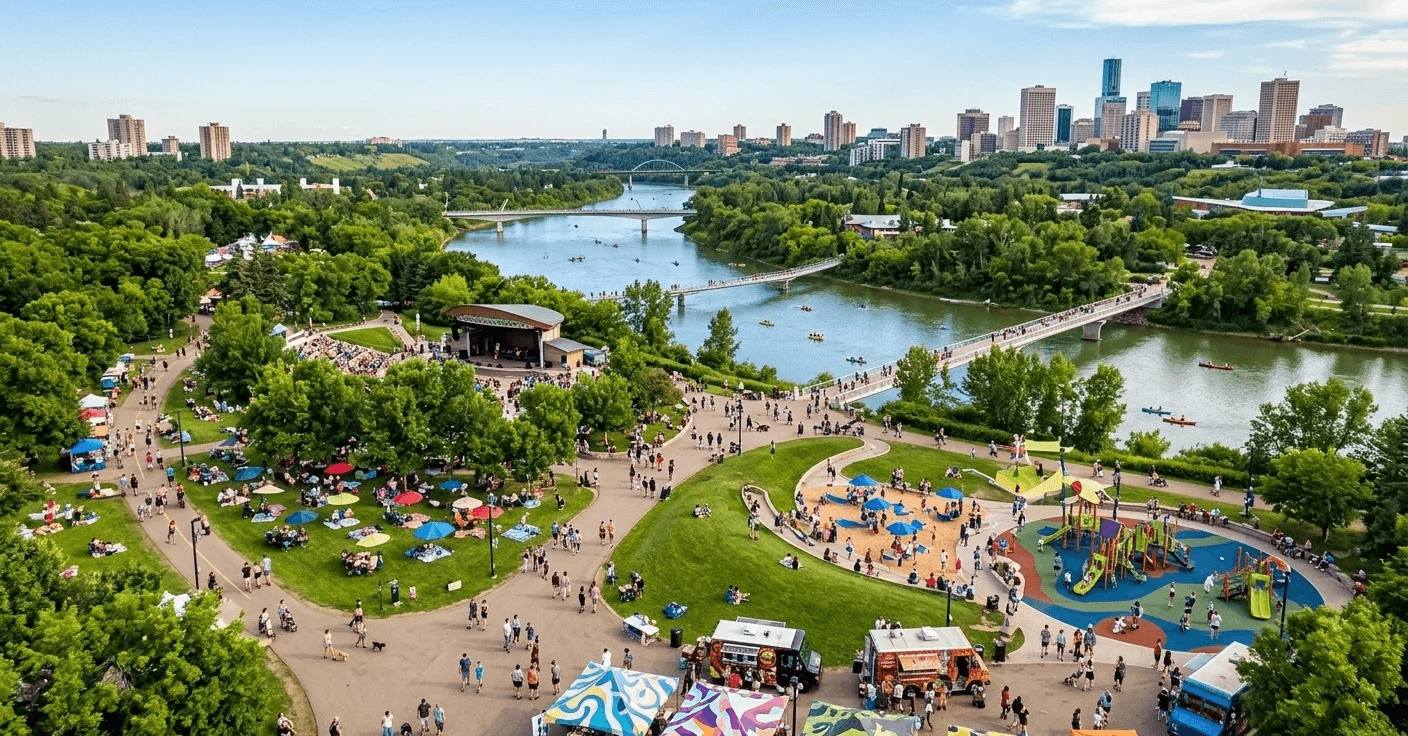
Hawrelak Park Reopening in Edmonton, Alberta — Skating & Winter Upgrades Return
Hawrelak Park reopening brings updated skating facilities and outdoor lake skating back to Edmonton after a major 3-year rehabilitation project.

Nov 12, 2026
Short-Term Rental Regulations in Edmonton, Alberta | What's Changing
Edmonton's urban planning committee debates short-term rental regulations that could reshape residential neighborhoods across the city.

Nov 9, 2026
Pumpkin Rescue Drive in Edmonton, Alberta: Halloween Pumpkin Donation for Rescued Farm Animals
Edmonton's pumpkin rescue drive collects Halloween pumpkin donations to nourish rescued farm animals at Alberta sanctuaries. See how the community helps.
Nov 4, 2026
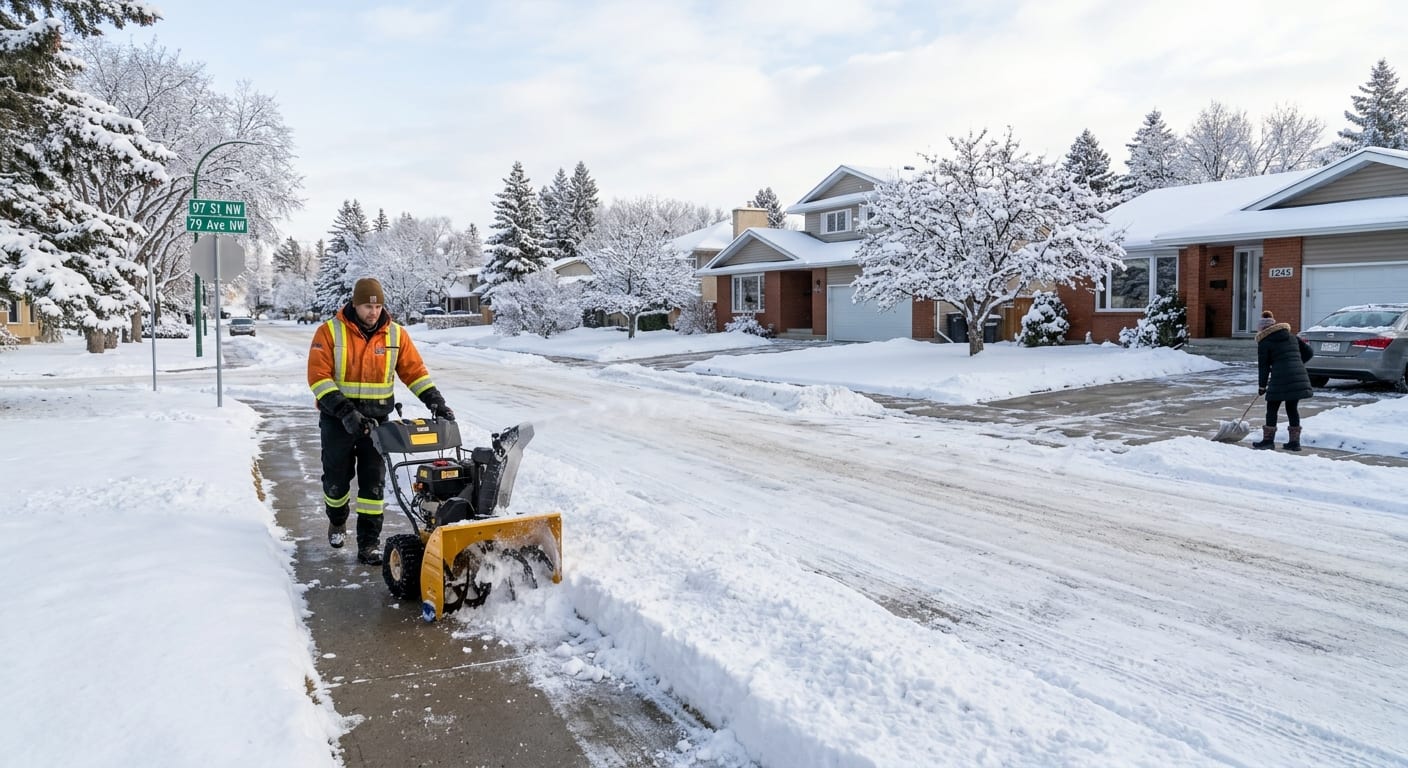
Residential Snow Clearing Standard in Edmonton, Alberta — What Homeowners Need to Know
Learn about Edmonton's residential snow clearing standard, the new snow removal policy, and the 12-day snow clearing rule every homeowner must understand.
0 Comments
Join the conversation
Be the first to comment
Share your thoughts above.