

Urban Planning Committee Examines Proposed Short-Term Rental Restrictions
An urban planning committee weighs new short-term rental restrictions affecting residential neighborhoods
A quiet but consequential debate is unfolding inside Edmonton's city hall, and its outcome could reshape the character of residential streets across the city for years to come.
The urban planning committee has emerged as the arena where competing visions for Edmonton's housing future are colliding — with short-term rental regulations sitting squarely at the center of the fight.
On one side stand property owners and home-sharing hosts who argue they are running responsible small businesses that contribute meaningfully to the local tourism economy and help cover rising household costs.
On the other, a growing coalition of housing advocates, hotel industry representatives, and neighborhood associations who insist the city's current approach leaves far too many gaps — and far too many loopholes that savvy operators have learned to exploit.
What began as a licensing conversation has quickly evolved into something far more complex and politically charged.
In 2024, council passed a motion requiring all short-term rental operators in Edmonton to register for a business licence — a foundational step that most agreed was long overdue given how dramatically the market had grown in recent years.
That requirement sparked a notable shift: licensed short-term rental properties climbed by roughly 70 percent between mid-2024 and mid-2025, a number city administration has pointed to as evidence that the current framework is producing real results without the need for heavier intervention.
Administration went further, releasing a report that advised against introducing tougher short-term rental restrictions, arguing that many proposed measures would be difficult to enforce in practice and could expose the city to legal challenges down the road.
Nuisance complaints tied to short-term rentals remain extremely low — representing a fraction of a percent of total bylaw complaints citywide — and officials noted that public engagement revealed generally positive attitudes toward home sharing among Edmonton residents.
But not everyone is convinced that low complaint numbers tell the whole story.
Councillor Michael Janz has emerged as one of the more vocal advocates for tightening the rules, pushing the committee to consider a host-presence requirement that would mandate operators to live on the property they are renting out.
The proposal would effectively prohibit so-called ghost hotels — entire homes or multi-unit buildings operated as de facto commercial accommodations with no permanent resident on site, often invisible to neighbors until something goes wrong.
Janz has also raised pointed questions about the integrity of licensing data without independent third-party verification, suggesting that self-reported compliance may not fully capture the true scale of unregistered operations quietly spreading across Edmonton's residential neighborhoods.
Despite the administration's cautious recommendations, councillors directed city staff in September 2025 to return with a fuller set of regulatory options — a signal that the committee is not prepared to close the book on tighter oversight just yet.
Those options are expected to include measures around platform accountability, mandatory data-sharing agreements with rental platforms, and a structured enforcement model that escalates consequences for repeat violations rather than treating every infraction as a first offense.
That directive marked a meaningful turning point, as the committee moved from accepting the status quo to actively exploring what a more assertive regulatory posture could look like in practice.
The Alberta Hotel and Lodging Association has been particularly outspoken, sharply criticizing the city administration's initial report and arguing it failed to account for the broader impact that unregulated short-term rentals have on Edmonton's long-term housing supply.
Industry representatives have argued that without direct access to data from rental platforms, the city has limited ability to verify who is actually operating, how many units are involved, or whether reported compliance numbers reflect the reality on the ground.
The concern isn't just about noise complaints or parking headaches — it's about what happens to rental availability when residential units are quietly converted into full-time visitor accommodations, one property at a time.
That tension is playing out neighborhood by neighborhood across Edmonton, where residents have begun raising concerns about the rapid growth of infill housing and how some of those new properties are actually being used once construction crews have packed up and left.
The urban planning committee heard directly from residents who described noticing a revolving door of short-term guests in what were supposed to be family-oriented streets — bringing with them parking pressure, elevated noise levels, and a sense that their neighborhood's identity was being quietly renegotiated without their input.
Senior city planners acknowledged that the 2024 zoning bylaw renewal, which expanded permissions for row housing and infill development, has created new ambiguity around how those properties may be used — with some residents questioning whether certain buildings are functioning as lodging houses or high-turnover short-term rental clusters in all but name.
Proposed amendments to the city's zoning bylaw would introduce a new licence category specifically for short-term rental platforms, establish minimum rental period requirements, and prevent lodging houses from being reclassified or repurposed as short-term rental operations.
Representatives from Edmonton's development and building industry have signaled measured support for some of the proposed changes, noting that clearer rules benefit reputable operators and help level a playing field that has at times felt skewed toward those willing to sidestep existing requirements.
Meanwhile, rental platform representatives have emphasized that compliance rates in Edmonton are strong relative to other Canadian cities, and that responsible hosts rely on home sharing as a meaningful source of supplemental income — particularly in an economic climate where household costs continue to climb and many families are looking for every available option.
That framing has found a receptive audience among some property owners who worry that overly aggressive short-term rental restrictions could effectively eliminate a legal and financially meaningful option that many Edmontonians depend on.
The administration has also recommended expanding public education efforts to better communicate existing rules and host responsibilities to both operators and neighbors who may not fully understand what current bylaws permit or prohibit on their own streets.
That recommendation, while modest, points to a broader acknowledgment that enforcement alone won't resolve the underlying tensions — that community trust and clear communication matter as much as any bylaw amendment city hall could draft.
Edmonton is not navigating this debate in isolation.
Cities across Canada and around the world have grappled with how to regulate short-term rentals in ways that protect residential communities without snuffing out the legitimate economic activity that home sharing genuinely supports.
Some municipalities have moved aggressively — restricting short-term rentals to principal residences only, capping the number of nights per year, or demanding real-time data from platforms as a non-negotiable condition of operating within city limits.
Others have taken a lighter touch, relying on licensing and complaint-driven enforcement to manage problems as they arise rather than attempting to anticipate every scenario through blanket regulation.
Edmonton's urban planning committee now faces the task of deciding which path fits this city — a city where the housing market is tightening, where neighborhood character is evolving rapidly, and where the line between home and hotel has never been blurrier or more contested.
The coming months will determine whether Edmonton moves decisively toward a stricter short-term rental regulatory framework or settles into a more measured approach built on education, incremental bylaw updates, and a watchful eye on compliance trends as the market continues to shift.
What is already clear is that for Edmonton residents, housing advocates, and property owners alike, the stakes in this debate extend well beyond any single listing or vacant guest room on a quiet residential block.
The question at the heart of Edmonton's short-term rental regulations conversation is ultimately about what kind of city Edmonton wants to be — and who gets a seat at the table when its homes are being redefined. |

Nov 9, 2026
Pumpkin Rescue Drive in Edmonton, Alberta: Halloween Pumpkin Donation for Rescued Farm Animals
Edmonton's pumpkin rescue drive collects Halloween pumpkin donations to nourish rescued farm animals at Alberta sanctuaries. See how the community helps.
Nov 4, 2026
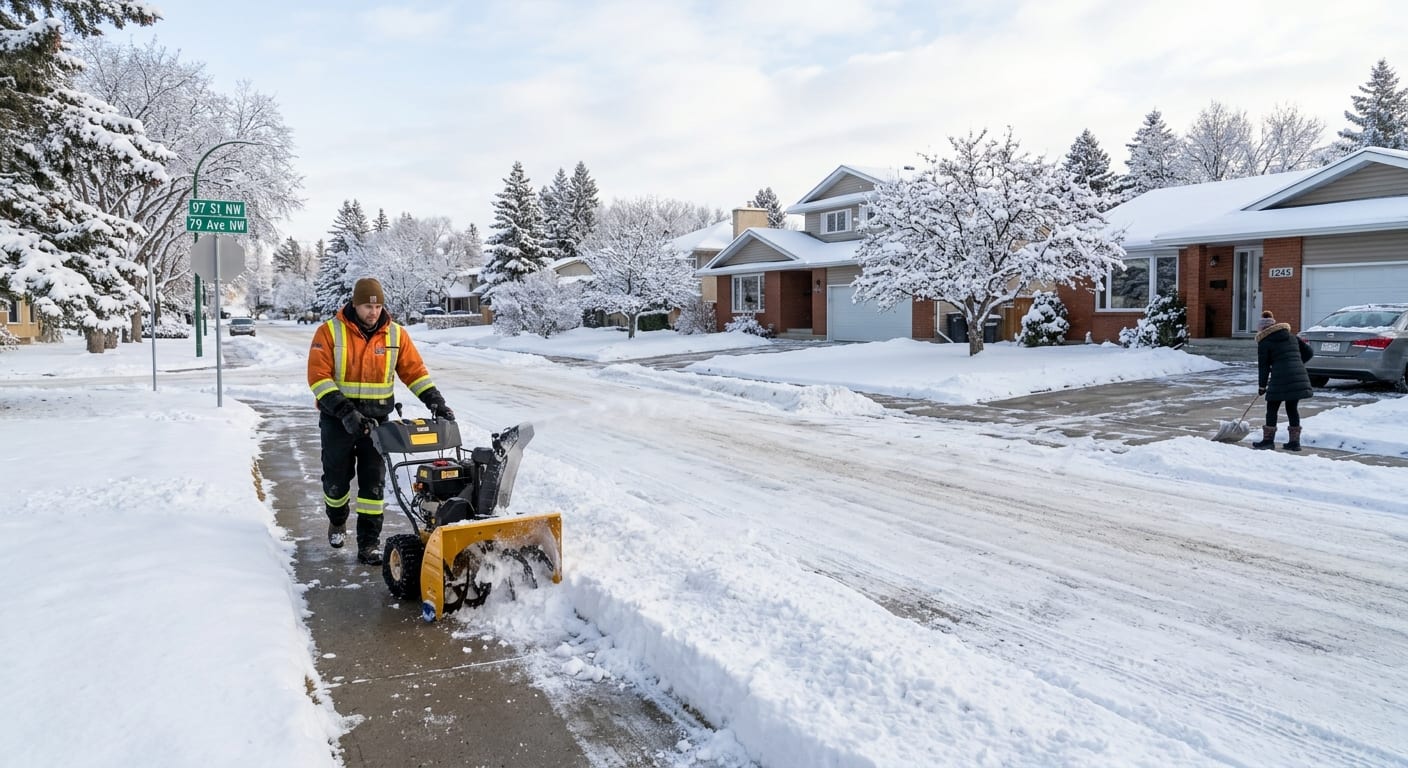
Residential Snow Clearing Standard in Edmonton, Alberta — What Homeowners Need to Know
Learn about Edmonton's residential snow clearing standard, the new snow removal policy, and the 12-day snow clearing rule every homeowner must understand.

Oct 29, 2026
Optometrist Surgical Procedures Now Available in Edmonton, Alberta
Edmonton optometrist surgical procedures are expanding. Laser eye procedures and minor eye surgery now offered in local Alberta clinics starting 2026.
Oct 26, 2026
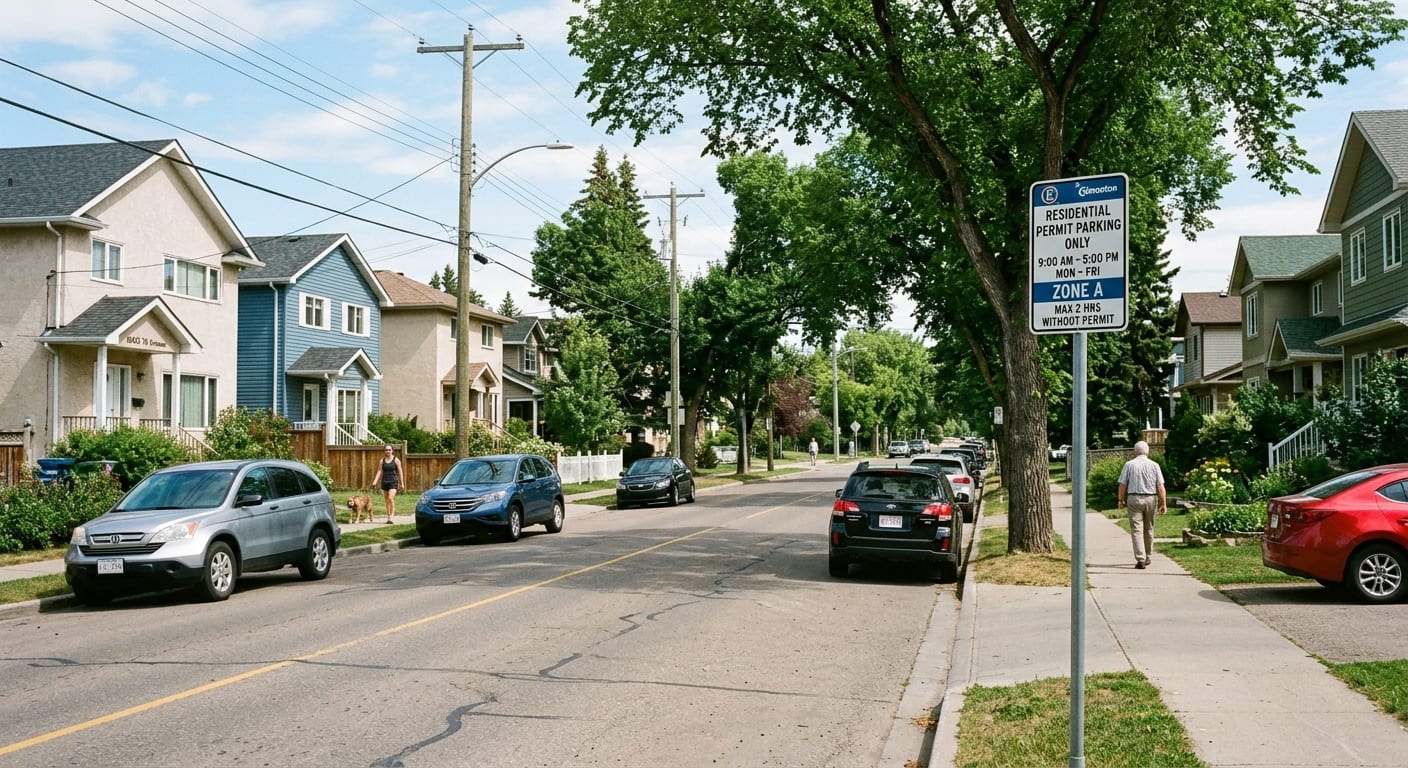
Residential Street Parking Rules in Edmonton, Alberta | What Residents Must Know
Residential street parking in Edmonton is changing. Learn the latest parking rules for residents and street parking regulations shaping your neighbourhood.
0 Comments
Join the conversation
Be the first to comment
Share your thoughts above.